











Related content
Small Interventions, Big Impact: How Nutrition is Transforming Youth Mental Health Care
Small Interventions, Big Impact: H...
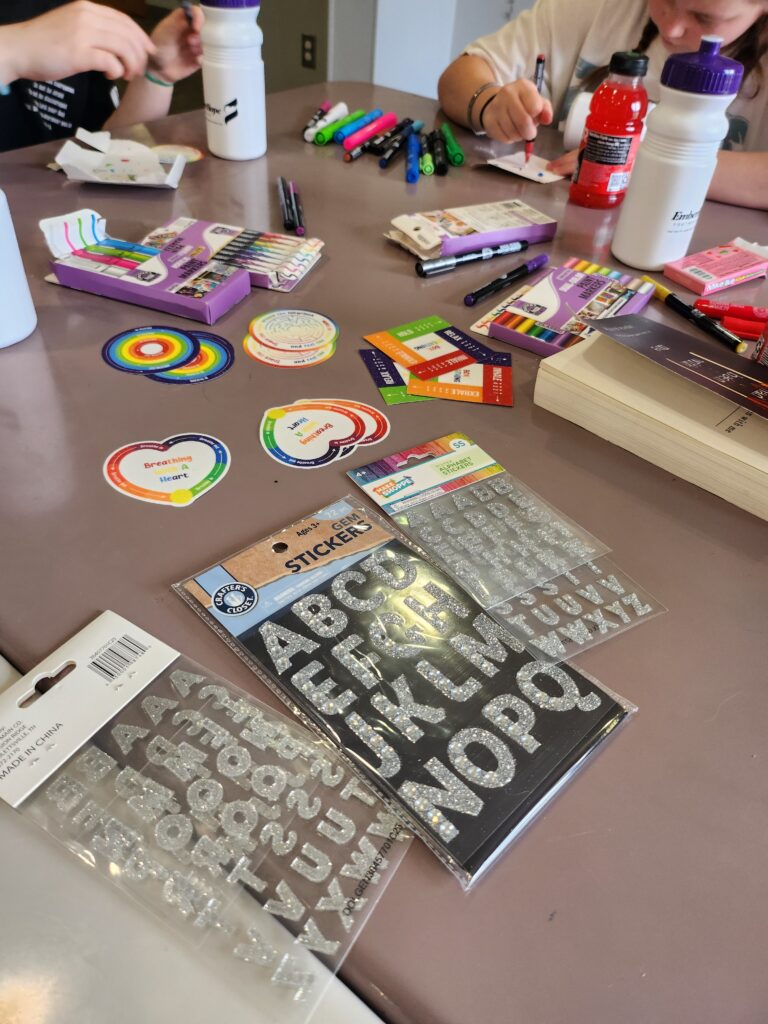
At EmberHope Youthville’s psychiatric residential treatment facility, something as simple as a protein snack and water is helping stabilize emotions and improve outcomes for youth.
Mobile cooking cart sparks community interest, fills need
Mobile cooking cart sparks communi...
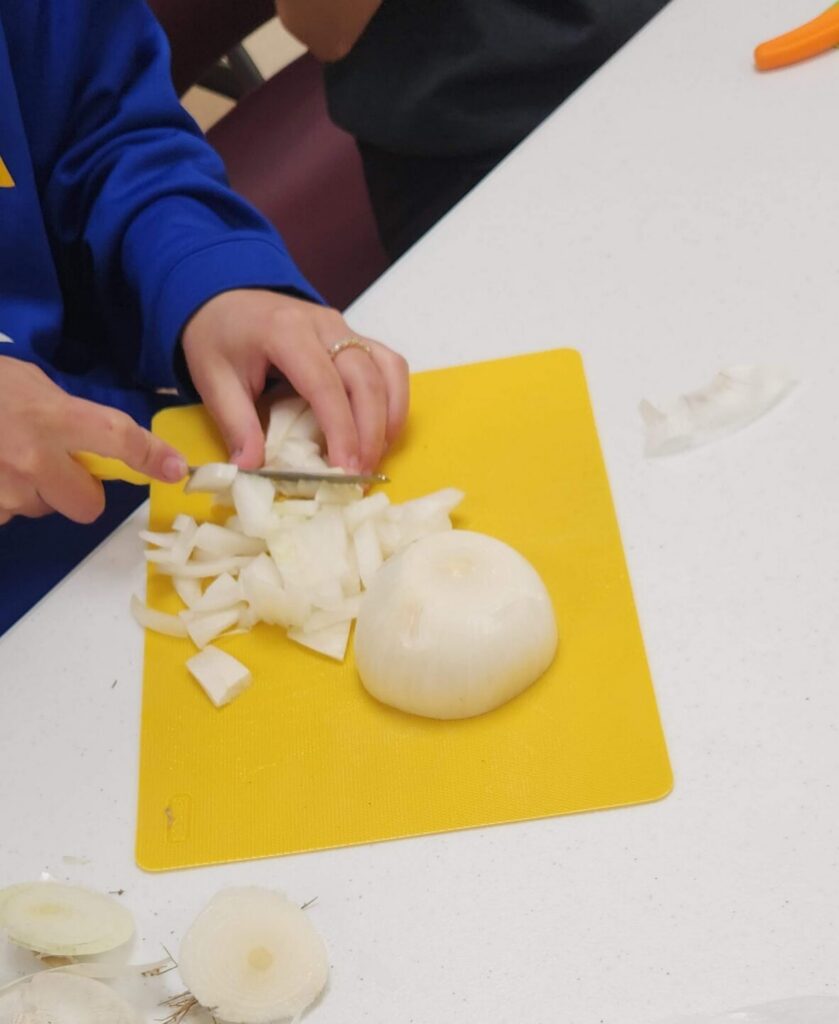
Parsons Public Library launched its “Let’s Cook!” program in spring 2025.

Therapeutic Day Services Bring Stability, Care for Foster Care Youth
Therapeutic Day Services Bring Sta...
The Therapeutic Day Services Program is the first of its kind in Kansas, and is a partnership between EmberHope Connections and Mental Health America of South Central Kansas.
This story is connected to a four-part series highlighting the work of the organizations and communities who received Hunger Free Transformation Grants in 2024.
KANSAS CITY, Kan. – For many people across our state, fresh produce may seem abundant, but that isn’t always the case for everyone.
During a recent visit to the Argentine Neighborhood in Kansas City, Kan., Sydney Schier saw the impact Kanbe’s Markets is having in the area.
As the nonprofit’s redirection and sustainability program manager, Schier witnessed how six boxes of rescued pineapples brightened the day of a young girl visiting The Hub Argentine, a local indoor/outdoor pantry, while also celebrating her birthday.
“That’s what always stands out to me,” Schier said. “At Kanbe’s Markets, we divert a lot of foods that people don’t typically have access to. Pineapple is not something you’d expect to find at a food pantry. And that’s what always stands out to me about our work. I think a lot of people take for granted that fresh food is everywhere. But these donations really are some people’s only way to get fresh produce.”
Kanbe’s Markets’ innovative zero-waste food distribution model ensures more food reaches more people in Kansas City, on both the Missouri and Kansas sides. That pineapple was likely marked as unsellable by a wholesaler – not because anything was wrong with it, but simply because it couldn’t stand upright on its own or fell outside standard sizing requirements. Kanbe’s Markets makes sure that good food gets to people instead of where that pineapple was headed: the landfill.
Through their Healthy Corner Stores program, the nonprofit provides fresh fruits, vegetables and eggs for consumers to buy at over 89 independently owned retail shops that they already visit, such as convenience stores, neighborhood mom-and-pop shops, and bodegas. The nonprofit supports these small businesses by enhancing their purchasing power, supplying fresh produce, coolers, and associated maintenance, and enabling stores to retain a portion of their produce sales. Kanbe’s Markets said this also helps lock in affordable prices on fresh fruit and vegetables for shoppers, 20 to 25 percent below conventional grocery stores, which remain stable throughout the year.
With a recent $276,875 Hunger Free Kansas Transformation Grant from the Kansas Health Foundation (KHF), Kanbe’s Markets’ work is expanding into an additional 25 Wyandotte County stores, potentially reaching 100,000 additional low-income, low-food-access residents.
When donated food arrives daily from wholesalers at their 30,000-square-foot warehouse, the Kanbe’s team and groups of volunteers sort it into four quality tiers:
- Tier 1: The highest-quality produce goes to Healthy Corner Stores at fixed, affordable prices.
- Tier 2: Imperfect, yet perfectly edible, produce, such as a soft cucumber or misshapen pepper, is donated to hunger relief partners for free distribution.
- Tier 3: Produce that is unsuitable for human consumption, but still usable, is redirected as animal feed.
- Tier 4: Any remaining food is composted.
Maxfield Kaniger, founder and CEO of Kanbe’s Markets, said nearly 60 percent of the food rescued is given, for free, to donation partners in Kansas City, Kansas, and Missouri, including food pantries and shelters. The organization aims to minimize waste and transform potential food loss into community nourishment and increased volunteerism.
Volunteers play a central role in the entire process.
With a dedicated core team and daily volunteer groups representing people from corporate partners and local schools, they help sort, pack, and prepare donations. Some of these volunteers witness firsthand the gratitude and joy the fresh produce brings. Schier said this community involvement, especially from youth groups and mission-based summer programs, is part of what makes the model sustainable.
Reaching People Where They Are
Building on its successful model, which has been used in Kansas City, Missouri, for the past eight years, Kanbe’s Markets is expanding into Wyandotte County, Kansas, to serve some of the state’s most vulnerable and food-insecure populations.
Recent data indicates that the poverty rate in Wyandotte County is 17.1 percent, which is higher than the state average of 11.2 percent. Approximately 16 percent of county residents experience food insecurity, compared to 14 percent of their state and national counterparts.
Kaniger said his team understands how these statistics emphasize the importance of meeting residents where they are – right inside their neighborhoods.
A key to the expansion effort into Kansas is trust.
Kanbe’s approach involves more than placing coolers in stores – it means working together with the community. With assistance from the KHF grant, the nonprofit hired Andres Chaurand as director of community engagement to focus solely on building relationships with store owners, local leaders, and residents in Kansas City, Kan.
Chaurand is from the area and understands Wyandotte County’s cultural and economic dynamics, including its large Latino population. Fluent in English and Spanish, he serves as a bridge between Kanbe’s and the local neighborhoods.
“It’s not just about access,” Chaurand said. “Our food is priced in a range that makes sense for these folks, that isn’t going to break the bank cost-wise, or is a challenge to reach. A lot of these people are walking [to get food].”
He also emphasized the importance of single-unit pricing. For example, someone may only need one onion or two potatoes for that evening’s meal, instead of entire bags. Kanbe’s Markets offer flexibility, affordability, and convenience to all.
The organization is also partnering with The University of Kansas Medical Center’s JUNTOS – Center for Advancing Latino Health in surveying communities in Wyandotte County to gauge awareness, identify concerns, and help build trust ahead of expansion, which has a September target date. The goal is to ensure the model resonates and is embraced locally.
Chaurand is already seeing the results of this hard work. Many store owners are enthusiastic once they understand the program: Kanbe’s supplies and maintains both the cooler and the produce, tracks sales, and removes spoiled food to be used in the next appropriate zero-waste tier. Store owners keep 30 percent of the profits, with no upfront cost.
The simplicity and benefit of the model often turn skeptics into advocates.
“Once they see people expecting fresh fruit and vegetables to be there, and that it sells, they buy into it,” Chaurand said. “We’re helping to create a culture shift where having fruit and veggies in your corner store is normal.”
That shift is also evident at community events.
At a back-to-school fair in Missouri’s Gladstone Elementary, Chaurand heard from a parent who said her children now stop into their local neighborhood store for produce, not candy.
“If we can make that kind of change in a kid’s snack habits, it means we’re on the right path.”
Partnering for Impact
While one part of Kanbe’s Markets’ model delivers produce to stores, another part focuses on redirecting imperfect, yet nutritious, food to nonprofits across the region.
With more than 50 non-profits relying on free food donations from Kanbe’s, that means roughly 10 hunger relief partners are picking up food from Kanbe’s daily, receiving between 200 and 600 pounds of produce every pickup, depending on their unique needs. Volunteers curate pallets specifically to match the needs of each organization. Some nonprofits don’t serve cabbage, while others do, and Kanbe’s tailors to those needs accordingly, as often as possible, Schier said.
Partners like Cross-Lines Community Outreach, Catholic Charities of Kansas City, and Kansas City Dream Center ensure this food reaches those who need it most.
Brian Hughes, executive director of the Kansas City Dream Center, said Kanbe’s helps them provide consistent access to healthy food in their food pantry, which assists 1,000 people every month in Wyandotte County.
“What Kanbe’s Markets is doing is so amazing,” Hughes said. “Their model is full cycle. We as Americans need to do a better job of not wasting food resources, and Kanbe’s does that.”
Another example is Welcome House, a 100-bed substance use recovery program for men. The organization not only picks up produce from Kanbe’s three times a week, Schier said, but their residents also volunteer to help sort it. Then they shop for ingredients they’ll use to cook meals that day.
“Seeing the guys from Welcome House light up over a big load of corn or broccoli is incredible,” Schier said. “When people get excited about vegetables, it shows we’re shifting how people value fresh food.”
Another Kanbe’s initiative expanding with their work in Kansas is the Food is Medicine voucher program. Through partnerships with KU Med and St. Luke’s, participating patients receive $10-$20 vouchers they can use to purchase produce at designated Kanbe’s Markets Corner Stores. It’s simple for store owners too, as they log the transaction, and Kanbe’s reimburses them directly.
Building a Better Food System
Kanbe’s Markets is proving that food rescue and food access are two sides of the same coin. With growing momentum, a committed team, and trusted community partnerships, they are working toward a food system where everyone has access to nutritious produce, regardless of their location.
And for some, that difference might be a pineapple on their birthday. For others, it’s knowing there’s a cooler just down the block with fresh produce they can afford and walk to.
“We can’t solve everything,” Chaurand said. “But we’re solving a very real problem for a lot of people, right now. And that keeps us going.”
###