










Related content
Small Interventions, Big Impact: How Nutrition is Transforming Youth Mental Health Care
Small Interventions, Big Impact: H...
At EmberHope Youthville’s psychiatric residential treatment facility, something as simple as a protein snack and water is helping stabilize emotions and improve outcomes for youth.
Mobile cooking cart sparks community interest, fills need
Mobile cooking cart sparks communi...
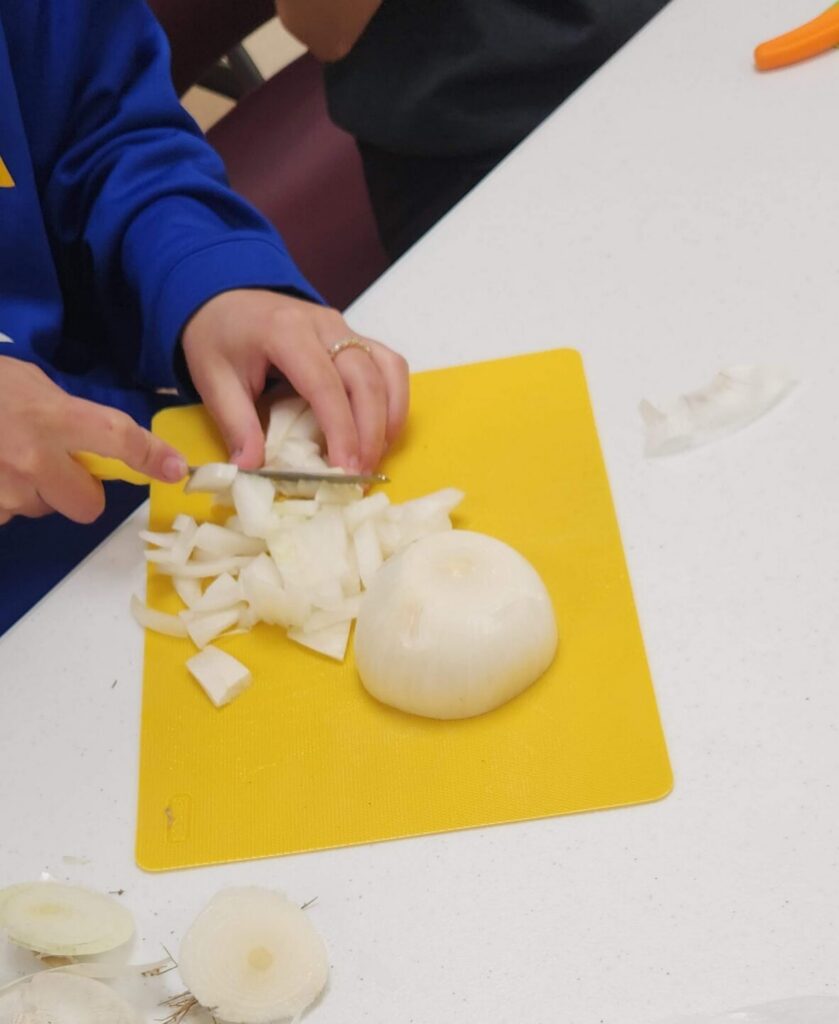
Parsons Public Library launched its “Let’s Cook!” program in spring 2025.

Therapeutic Day Services Bring Stability, Care for Foster Care Youth
Therapeutic Day Services Bring Sta...
The Therapeutic Day Services Program is the first of its kind in Kansas, and is a partnership between EmberHope Connections and Mental Health America of South Central Kansas.
Black and Indigenous women in Kansas experience higher rates of maternal mortality compared to their white peers. In the state, Black women are three to four times more likely to die than their white peers, and Indigenous women are more than twice as likely to die from pregnancy-related causes.
Sapphire Garcia understands this intimately. While in college and pregnant with her second child, she sensed something was wrong.
“I told my doctor she wasn’t moving as much,” Garcia recalled. “He brushed me off, and two days later, she passed away. I was nine months pregnant.”
Forced to deliver her daughter, Garcia’s grief was compounded by the stories that emerged afterward — family and friends sharing similar experiences of being dismissed, ignored, or harmed within the health-care system.
Between 2016 and 2018, the rate of pre-term births for Black mothers in Kansas was 51 percent higher than among all other women.
“I didn’t know how bad it was until it happened to me,” Garcia said. “That moment changed everything. I realized this wasn’t just happening to me — it was systemic.”
Initially, Garcia worked within traditional health-care systems and on a county task force, but it didn’t take long to realize those spaces weren’t built for transformative change.
“I’m an out-of-systems person,” she said. “Our families need support systems that exist alongside traditional ones.”
So, in 2020, she officially founded the Kansas Birth Justice Society (KBJS) — now celebrating five years of service — just before the pandemic.
KBJS is one of 30 partner organizations receiving core support through the Kansas Health Foundation’s Building Power and Equity Partnerships (BPEP) initiative. Announced in January 2024, BPEP provides long-term core support to empower organizations to grow their operations and influence as they work to address inequities that lead to health disparities.
“KBJS is focused on serving families of color who are impacted by perinatal health inequities,” said Valerie Black-Turner, director of community partnerships for the Kansas Health Foundation. “The unique ability to bring a diverse and inclusive community together has enabled them to effectively create and implement the state’s most effective community-based doula program for Black and brown families.”
The 10-year commitment gives KBJS the stability and recognition needed to deepen and expand its work.
“Kansas Health Foundation is well respected,” Garcia said. “Their support is a form of social capital. It helps elevate the conversation around our work.”
A Community-Born Organization
Garcia’s journey began with a self-funded pilot: Sacred Days Doula Service. Drawing from her own birth experiences and research background, she collected data from focus groups, interviews, and community conversations to determine what Black and Brown families needed.
“What we heard over and over was: They wanted culturally affirming care, mutual aid, and doula services,” Garcia said. “That’s what we built.”
She trained doulas, launched a mutual aid program, and held community-based health education sessions — all while running operations from her living room.
“It was clear early on: The problem isn’t our families; it’s the systems. We can be a stop-gap. We can meet people where they are.”
Garcia’s first major institutional supporter was the Kansas Health Foundation. She recalls her 2020 Zoom meeting with then-Director of Strategic Learning and Grant Administration Nadine Long.
“She really listened,” Garcia said. “They gave us our first grant: — $50,000. It helped us find our first tiny office, owned by someone who’d been a refugee. She understood what it means to be under-resourced.”
Those funds set KBJS on a path of growth, enabling the organization to reach more people. They located office space and moved out of Garcia’s living room.
Even though it was cramped, people found the office, which quickly filled with bins of baby supplies, postpartum kits, and donated essentials. But KBJS soon outgrew the space.
In November 2024, they opened the Matrescence Center in downtown Wichita’s Garvey Center. Just a few months later, they opened Liberation Place on East Douglas.
“KBJS works closely with the community to come up with innovative solutions that address vital needs for equitable perinatal health and advocates for changing systems that cause the health and racial inequities that impact individuals and families of color,” Black-Turner said.
The Matrescence Center: Healing in Color and Comfort
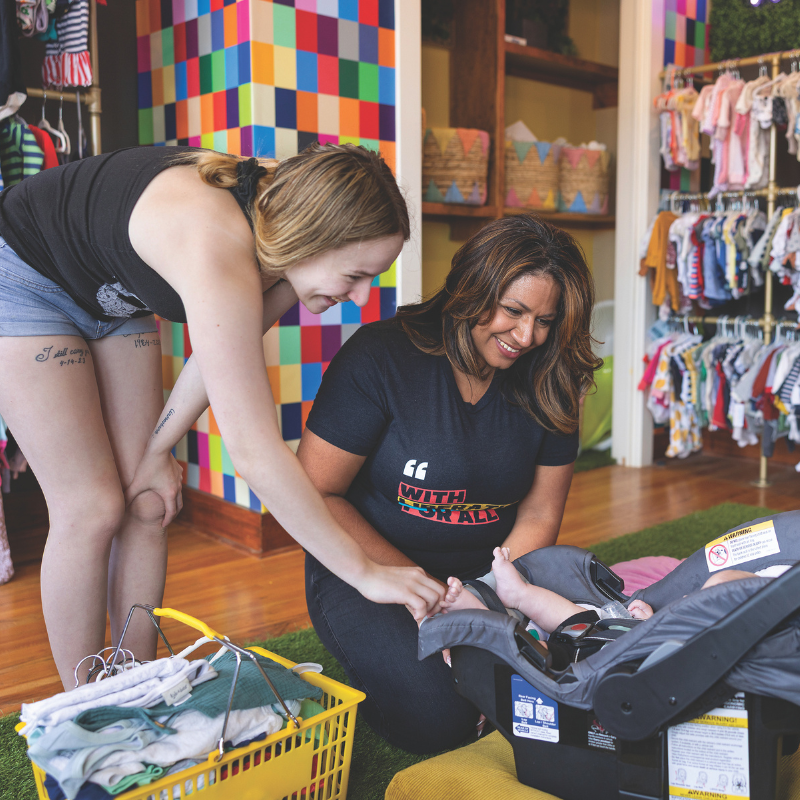
The Matrescence Center offers holistic, culturally affirming care to Black and brown families from the moment they learn they’re pregnant through early childhood.
“It doesn’t feel like a sterile clinic or charity space,” Garcia said. “We want people to feel worthy when they walk in the door.”
Renovated by the KBJS team and decorated by Garcia herself, the space radiates color, warmth, and life. Mental health is a core focus — especially given its role in postpartum mortality.
“There’s a connection between how we feel and how we heal,” she said.
The Center features two meditation rooms with soothing sounds, lights, and furniture, plus an art space for self-expression. A private room called The Milky Way supports breastfeeding and lactation.
“I’ve given birth four times,” Garcia said. “When I needed help with breastfeeding, the support was judgmental and hard to access. We had to change that.”
Workshops cover birth, breastfeeding, postpartum care, and reproductive education. Events bring families together to connect and heal.
“We focus on whole person wellness because we know that health doesn’t happen in a vacuum,” Garcia said. “How you feel about yourself and your place in the world impacts your health, particularly your mental health.”
Mental health is one of the top factors leading to maternal deaths after childbirth in Kansas. By fostering peer connections and nurturing mental health during pregnancy and postpartum, KBJS fosters emotional well-being.
“KBJS has and continues to make impact through their strong connection to the community where member and community leadership help shape their initiatives, services and supports for individuals,” Black-Turner said.
Liberation Place: Free, Secular Reproductive Support
Liberation Place, opened in March 2025, focuses on mutual aid to reduce barriers to reproductive health care. Mutual aid had already been part of KBJS’s work since 2022, but this stand-alone location exists to expand and scale the work to meet the needs of the whole community.
“We’ve seen attacks on bodily autonomy at every level,” said Garcia, who has long been involved in reproductive rights advocacy. “This space pushes back. People can get what they need — no shame, no misinformation, no barriers.”
Unlike crisis pregnancy centers, Liberation Place offers secular, evidence-based support without judgment.
Supplies — prenatal vitamins, Plan B, condoms, diapers — are donated and freely available. Liberation Place’s support is not restricted by age, income, ethnicity or other factors.
“It’s reproductive justice in action,” Garcia said. “It answers the question: ‘How do we serve people outside of the systems that have harmed them?’”
For KJBS, it’s not enough to just check a box and say they’re doing the work.
“We want to do it in a way that resonates with folks in the community because we are in community with them,” she said. “This is a ‘by us, for us’ effort. Mutual aid around reproductive health is more important now than it has ever been.”
Training Doulas, Restoring Traditions
Black-Turner says KBJS’s unique ability to bring together a diverse and inclusive community has enabled the organization to create and implement the state’s most effective community-based doula program for Black and Brown families.
Before 1921, pregnancy and maternity care looked very different. Black and Brown women were cared for by Grand Midwives — community-based birth workers rooted in tradition and cultural knowledge.
“Part of this work is reclaiming that legacy of community-centered birth and community-centered birth attendance and support,” Garcia said.
Through its Catalyst Doula Training Program, the organization is training 200 doulas in 2025. The first cohort graduated in April.
Black-Turner said the strength of the KBJS program is the culturally affirming, community-based doula care that is tailored to assist individuals in optimizing their health prior to, during and after pregnancy.
KBJS formed the Kansas Doula Alliance, which interfaces with hospital systems, provides continuing education, and ensures doulas are treated as legitimate care providers.
The free Kansas Doula Directory connects clients with trained doulas statewide.
“Everybody giving birth should have a doula because the doula is helping prepare them for the experience,” Garcia said. “Doulas help ensure options are known and respected.”
Garcia said the data backs up the importance of the doula model for improving health outcomes, not because they can change people’s health, but because they can prepare women for the birth experience and empower them to choose their experiences.
“Doulas don’t provide clinical care,” Garcia said. “They’re guardians of dignity, respect and informed choice.”
“The community-based doula program has made major impacts on reducing C-section rates, preterm birth and preeclampsia, thereby improving the health outlook of hundreds of Black and Brown families,” Black-Turner said.
Birth is still unpredictable, but being able to show up prepared makes a big difference, Garcia said.
From Mother to Doula to Advocate: Shaunita’s story
In 2020, Shaunita Phillips was working in higher education when her daughter became pregnant. Initially, Phillips could go to appointments with her daughter because she was working remotely, but when the students returned to campus, she had to go, too.
Phillips wouldn’t describe her birth experiences as traumatic; she wanted something different for her daughter. A friend suggested she look for a doula, and that’s when she found Garcia online.
Garcia went to prenatal appointments with Phillips’ daughter, and came to her daughter’s home to help prepare. Phillips was there to learn as her daughter’s birth coach. Garcia recognized Phillips’ supportive nature and encouraged her to consider becoming a doula.
Phillips was initially hesitant, but Garcia persisted. She told Phillips she could teach her the skills because she already had the personality for it.
“Being in the room with my daughter, watching Sapphire as her doula and learning from her, seeing the support and the passion and the birthing experience my daughter had compared to the procedure I had, I fell in love with it,” she said.
Phillips participated in KBJS’s first grant-funded doula training. Now, she has her own practice through her Sensual Selections and Spa.
“Being that maternal disparities are so high in Black women in our community, I definitely want to be one of the voices of advocacy but also a partner in change,” Phillips said. “I can do that by being a doula.”
Phillips is passionate about educating others about doulas. From offering free consultations to couples to guest speaking to nurses in training at WSU Tech, she is driven to share the importance of doulas and how they can help change maternal outcomes.
“My prayer is that through doulas, and as doulas are growing, that I will be able to be part of the change to improve maternal disparities,” she said.
Policy Advocacy and Civic Power
From the beginning, KBJS has worked to advance reproductive justice, not only through care, but also through policy change.
Garcia partnered with the Kansas Birth Equity Network and former legislator Melody McCray-Miller to introduce a bill reforming the state’s maternal mortality review process.
“There was nobody at the table with lived experience for what it’s like to be a Black or Indigenous family going through these systems,” Garcia said. “We changed that.”
While the bill didn’t pass, KBJS has been successful in other advocacy efforts. KBJS leaders are now serving on almost every major maternal health task force in the state, ensuring Black and Indigenous voices help shape decisions.
A major win for KBJS was securing Medicaid reimbursement for doulas.
“We worked with the Kan-Care program to co-design a state plan amendment so that doulas could be reimbursed by Medicaid,” Garcia said. “In other states, community-based doulas and doula organizations like ours have struggled to get systems to listen and to implement reimbursement in an equitable way.”
Phillips said she was thankful to be part of the advocacy for Medicaid inclusion, answering questions about doulas and what they do to assist women when they are at their most vulnerable.
The KBJS also leads voter education, connecting political awareness to health equity and how legislative decisions impact access to health care and early childhood programs.
“We want people to be aware so they can engage in the process,” Garcia said. “When people are informed and engaged, they vote — and when they vote, systems change. Civic engagement is a public health strategy.”
The organization’s Rise and Reclaim Tour, a series of focus groups across the state, will serve as the basis for a State of Birth Justice policy white paper to be published in mid-2025. The paper will provide recommendations for policy changes needed to make Kansas a more equitable place for maternal and infant health.
“We have to create a reality in which everybody’s voice matters,” Garcia said. “But our voices have to be there in the first place and be heard. We have a lot of work to do.”
From Dream to Reality: Scaling for Impact
KBJS has a bold but achievable vision: to eliminate — not just reduce — racial disparities in maternal and infant health.
Black-Turner said KBJS’ power and influence is in how the organization is using innovative ways through building community to change systems.
“The KBJS partnership will help Kansas lead the nation in health by eliminating racial and health disparities in maternal health and infant health in Kansas through systems changes that create equitable conditions for individuals to have a safe and healthy birth,” said Black-Turner.
BPEP is key to their success. Changing systems takes time, and takes resources.
“We’re not trying to burn it all down and start over tomorrow,” Garcia said. “But we’re building something new alongside what exists. And it’s working.”
BPEP gives KBJS a jumpstart toward its goals to expand programming across the state and, one day, into other states.
“We know that we won’t just burn the systems down and have new systems overnight,” Garcia said. “I don’t feel like it’s a wild dream. This is achievable. Being part of BPEP helps make it achievable.”
BPEP provides KBJS with funding, technical support, and peer connections across the state. Garcia is excited to learn from other BPEP partners.
“Having that help and that technical expertise is helping us scale,” Garcia said. “Our first goal is statewide presence — every major metro. But long-term, we want to take this model national.”
Their blueprint — community-designed care, peer-led education, mutual aid, and legislative advocacy — has already proven effective.
“We want every birthing person to have access to the care and support they deserve,” Garcia said. “We believe a future without these disparities is possible. And we’re building it.”