


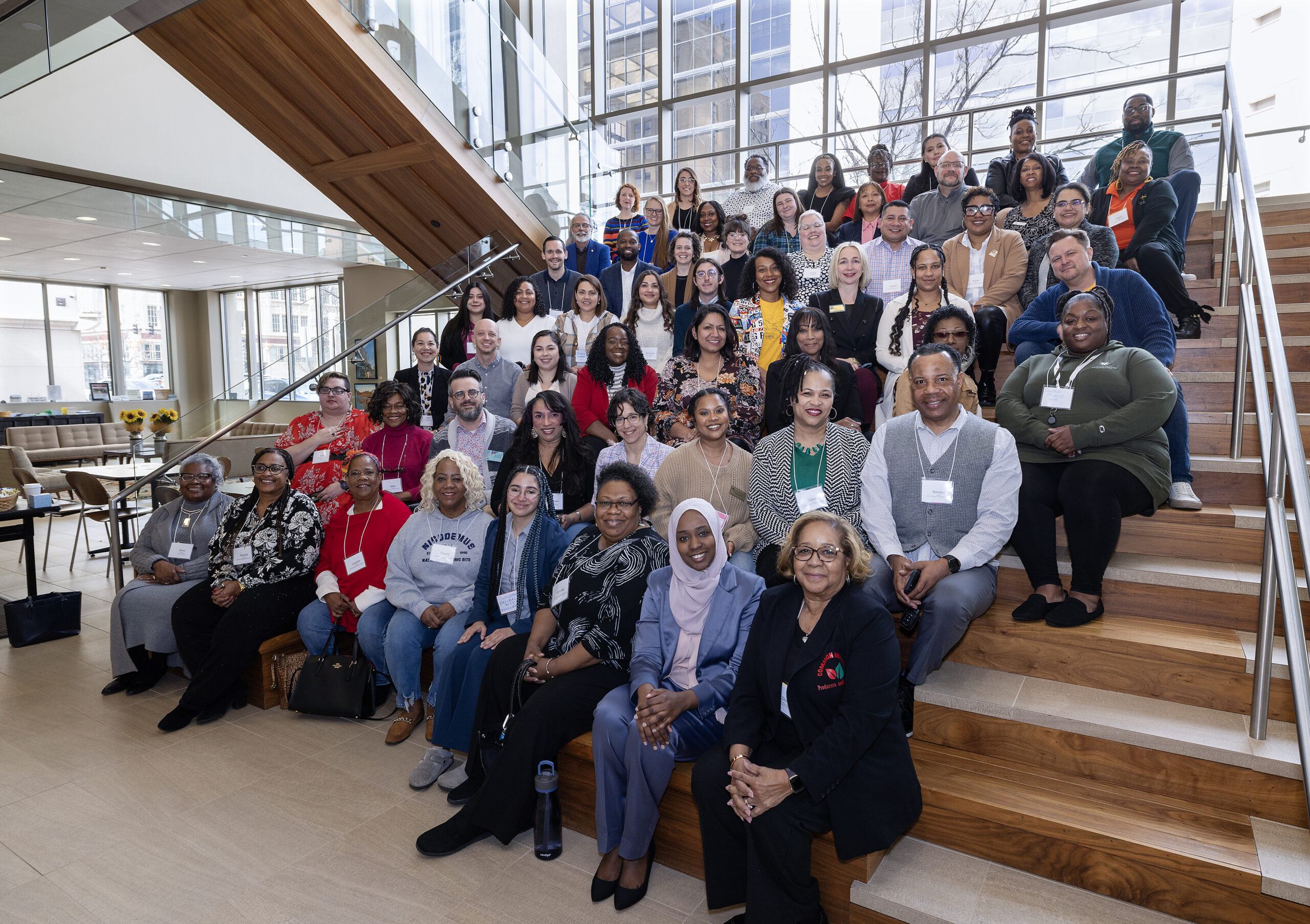



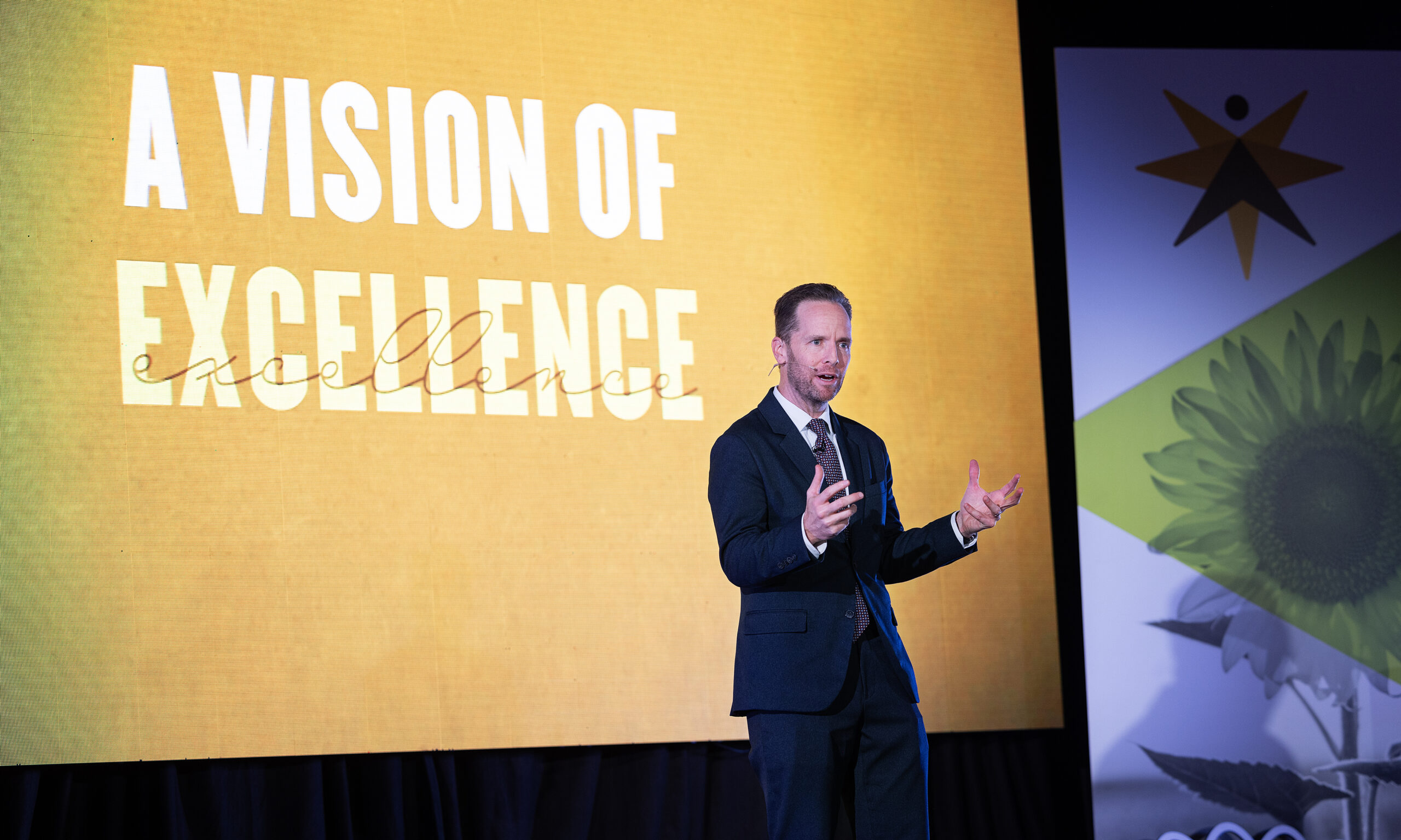



FuseKS is the moment we move from conversation to action.
As the Kansas Health Foundation identifies its next major health challenge, we start by listening. We gather stories, perspectives, and data from across Kansas. Using our Mobilization Arc as a guide, we narrow what we hear to a point where collaboration becomes possible. This year’s focus was Upward Mobility. The goal going into and coming out of FuseKS was to create a Blueprint for Upward Mobility in Kansas that we could activate together.
Before we could build it, we needed to understand the values and assumptions in the room. We started by mapping factions.
Factions vs. Stakeholders
A faction represents the values and beliefs that shape how people understand a problem. We often conflate factions with stakeholder groups, which describe a person’s role, sector or area of interest. Within any sector, whether education, business or health, people in the same room can hold sharply different beliefs about what should be done. That’s where factions emerge.
Surfacing those beliefs causes tension. It also creates the conditions for finding common ground and building the broader coalition the work requires.
Factions at FuseKS
Before convening at FuseKS, we asked participants what factions they believed were at play on Upward Mobility. We did not ask whether any faction was right or wrong, We asked which ones existed and which they identified with most.
Five came into focus:
- Kansans must try harder. The belief that mobility is a matter of personal effort. (You can lead a horse to water, but you can’t make it drink.)
- Business must lead. The belief that this is a private sector issue, because businesses set wages and have to champion the work.
- Government must deliver. The belief that creating the conditions for Upward Mobility is what the government is for.
- Nonprofits must step up. The belief that this is the domain of nonprofits, community organizations and churches.
- The system must change. The belief that the results we’re getting are produced by the system as it is, and that the whole system has to change to produce different ones.
The labels are blunt, but what we heard from the people who chose them was more nuanced than the labels suggested.
During the event, KHF’s President & CEO Ed O’Malley asked the room to do something rooms rarely do: physically commit to a faction, stand under its label in front of everyone else and explain the choice. “The system must change” drew the largest group. One of the most surprising moments, though, came from the smallest faction. The one the rest of the room had strong assumptions about.
Why Factions Matter
Yeni Silva-Renteria, Executive Director of the International Rescue Committee, walked over to the “Kansans must try harder” faction and not long into the exercise, she had an opportunity to speak to her choice:
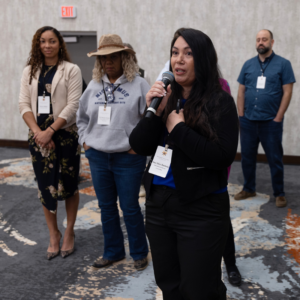
“I believe that as a community, we do have the power, but we let somebody take it away from us. Often, it’s because of fear. It’s because we don’t know what we don’t know. But it’s definitely something that I believe we need to take back.”
Her argument was not that Kansans needed to pull themselves up by their bootstraps, which we all assumed would be at play in that faction. Her argument was about community agency, about reclaiming something that had been ceded. The label had the room expecting one thing. Yeni had something else to say.
That is the work factions do. They surface the assumptions we walk into a room with, and they give the groups we have written off a chance to say what they actually believe.
The Tension
A Blueprint built without that exercise would have been built on a stack of assumptions about people who weren’t in the room and assumptions about the people who were.
Working across factions is uncomfortable. It asks us to set aside our assumptions and connect with people who think and behave differently than we do. This is not avoidant or passive. It is not abandoning your values or tolerating hate. It’s an exercise in humility and confidence in tandem. One without the other is a recipe for disaster. But when held simultaneously, they enable you to change your mind about a person without changing your mind about your values or what you hold dear.
The Blueprint for Upward Mobility does not belong to KHF, and it does not belong to any one of the more than 1,000 Kansans who contributed to its development. For it to work, it can’t be owned by any one person or organization. It has to activate as many Kansans as possible. That’s the tension. That’s why factions matter.
Once complete, the Blueprint will be ready for any faction, organization or Kansan to embrace and act on it.
We hope you’ll do just that.