









This article is part of the nine mindsets series based on the book Leading Health: How You and 30,000 Kansans Help Communities Thrive. The series was presented at Kansas Health Foundation’s annual Partner Summit in 2026.
In Leading Health, we outline nine mindsets the 30,000 need to adopt to drive the policy and programmatic changes that will close the Health Gap in Kansas. The first of these mindsets—Work Upstream—asks us to move away from simply treating the symptoms of a problem and encourages us to move toward the root cause.
Upstream work is systemic, targeting systems and processes that affect entire populations. Downstream work is treatment, direct services that provide immediate relief but offer no real change to address the underlying cause.
In the book, author Ed O’Malley, Kansas Health Foundation President & CEO, illustrates this mindset with a parable: A community organizes itself to continuously rescue child after child from a river. It’s a massive, never-ending effort until one person finally walks upstream to find out why these children keep ending up in the water.
Get your copy of Leading Health
Of course, direct service work must continue. To close the Health Gap, however, we need both charity and change. Mindset #1 asks us to consider what’s happening upstream and what we can do about it.
Mapping Our Work on the River
That’s the work we asked our partners to do at the 2026 Partner Summit.
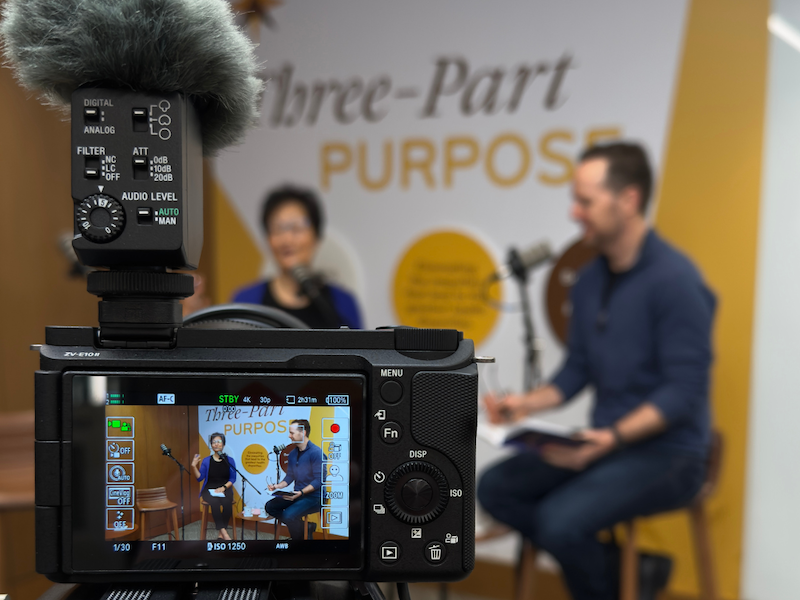
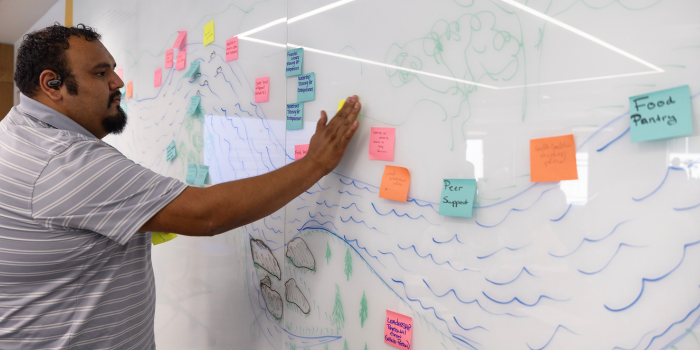
Chris Harris, Founder & CEO of Heartland Strategies, and I co-facilitated a session on Mindset #1, putting the parable in our partners’ hands and asking them to map their own organization’s work along the river.
In small groups, our partners picked the top three things their organizations did and, using Post-It Notes, placed them on the board where we’d drawn a river.
Johnathan Sublet of SENT Topeka mapped their food pantry both upstream and downstream. It offers direct access to food for the immediate relief of hunger while also hosting Community Health Workers who follow up with patrons to connect them to other services.
“Our food pantry actually serves as a hub to all of our other services and community resources.”
Another partner who works with refugee families easily identified their downstream work in providing services and access to resources directly to vulnerable families. Upstream, they kept “hitting a wall” when it came to advocacy and policy “ because we’re trying for families to access this, but there’s a lot of policies that do not allow our families to do so.”
Hear more examples in this episode of Leading Health podcast
At the end of the exercise, we had our network of partners visually mapped along the river and a shared understanding of the upstream and downstream work happening in our ecosystem. Then, we asked what was missing.
Moving Upstream Isn’t Easy
Partners ideated across the spectrum of services they provided: affordable housing, hunger, debt relief and more.
One partner brought up a grant that helps people get out of debt from payday lending. Downstream is immediate debt relief. Upstream is regulating payday lending to prevent people from going into such debt in the first place.
Another partner proposed covering universal basic needs—guaranteed food, healthcare, housing, income—all of which take up a lot of downstream work right now. Think food banks, free clinics and partners like SENT who are working to eliminate the affordable housing problem in Kansas. Upstream, they identified the challenge this type of work faces: preference for small government, personal responsibility and opposition to government growth.
Moving upstream isn’t easy. In fact, we write in Leading Health that “…heading upriver is different and disruptive. It’s not the norm. It’s provocative and might be misunderstood.” People come from different factions with different values. Misinterpretations happen. It can be messy. This is why the Kansas Health Foundation holds space for conversations like this.
The community in the parable at the start never stopped pulling children from the river. Our partners aren’t going to stop running clinics, housing programs and pantries. Downstream work doesn’t pause when someone walks upstream, but someone still has to. Mindset #1 asks how you’ll consider walking upstream.