










This article is part of the nine mindsets series based on the book Leading Health: How You and 30,000 Kansans Help Communities Thrive. The series was presented at Kansas Health Foundation’s annual Partner Summit in 2026.
The first part of our Three-Part Purpose Statement is to empower Kansas to lead the nation in Health. To do that, we have to eliminate the inequities that lead to the greatest health disparities and that requires us to understand and address the underlying conditions that continue to produce inequitable health outcomes.
Unfortunately, the greatest health disparities often sit along the lines of race and ethnicity.
According to the Commonwealth Fund’s 2026 State Health Disparities Report, Kansas ranked among the worst—39th out of 39 states measured—for health access, opportunity and outcomes for Black Kansans. There is no way we will climb America’s Health Rankings if we fail to address the reality that too many Kansans don’t have the same access, opportunity and outcomes because of race.
However, in many parts of the country right now, it can feel like we can’t have a conversation about race and racism. Communities are witnessing debates about how history is taught, how inequities are discussed and what language is appropriate for describing these challenges.
The moment we are in requires more courageous conversations about race and racism. When writing Leading Health, we knew that it had to be one of the key mindsets Kansas needs to adopt if we are to lead the nation in Health.
Get your copy of Leading Health
Mindset #3: Race and Racism Matters
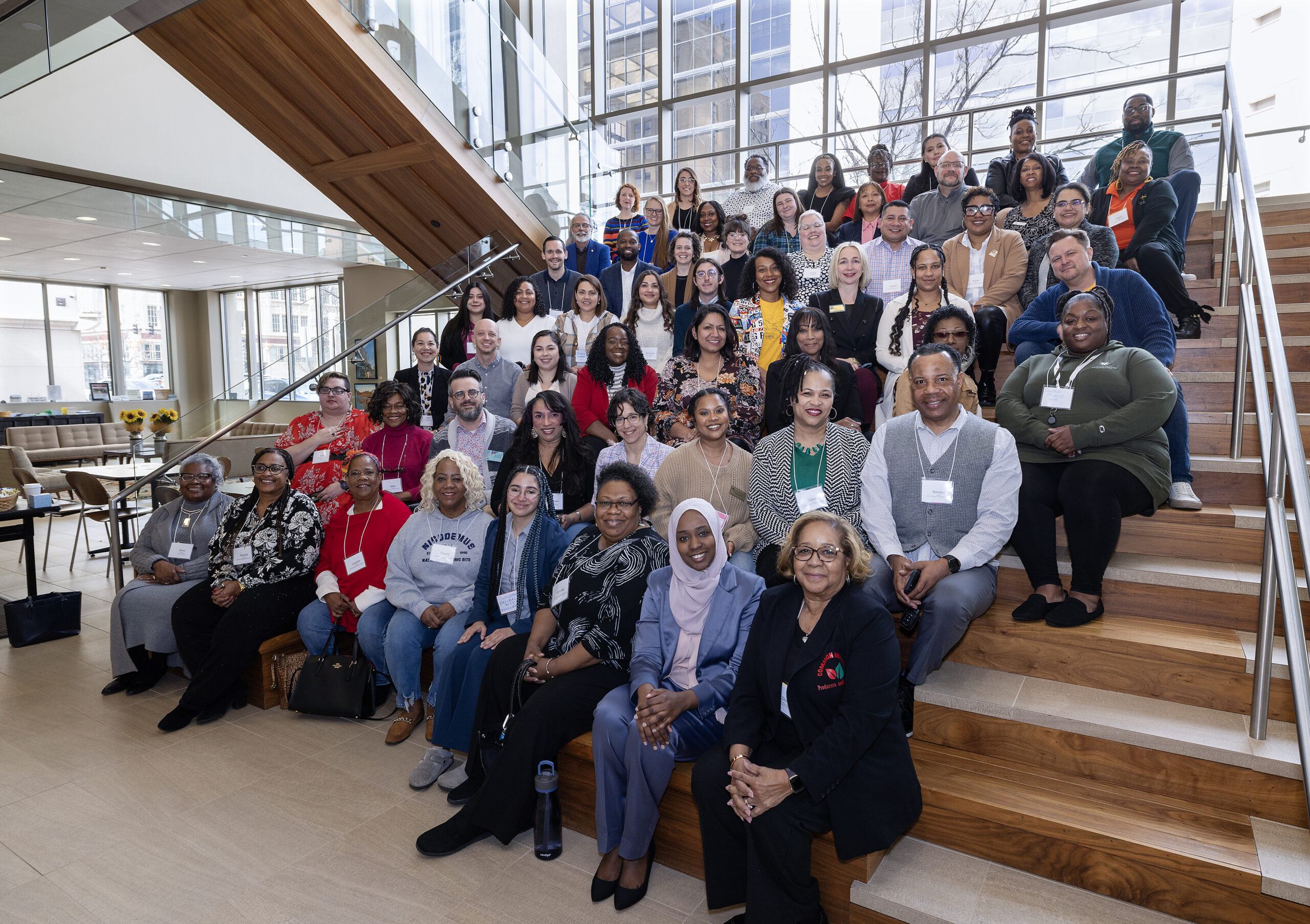
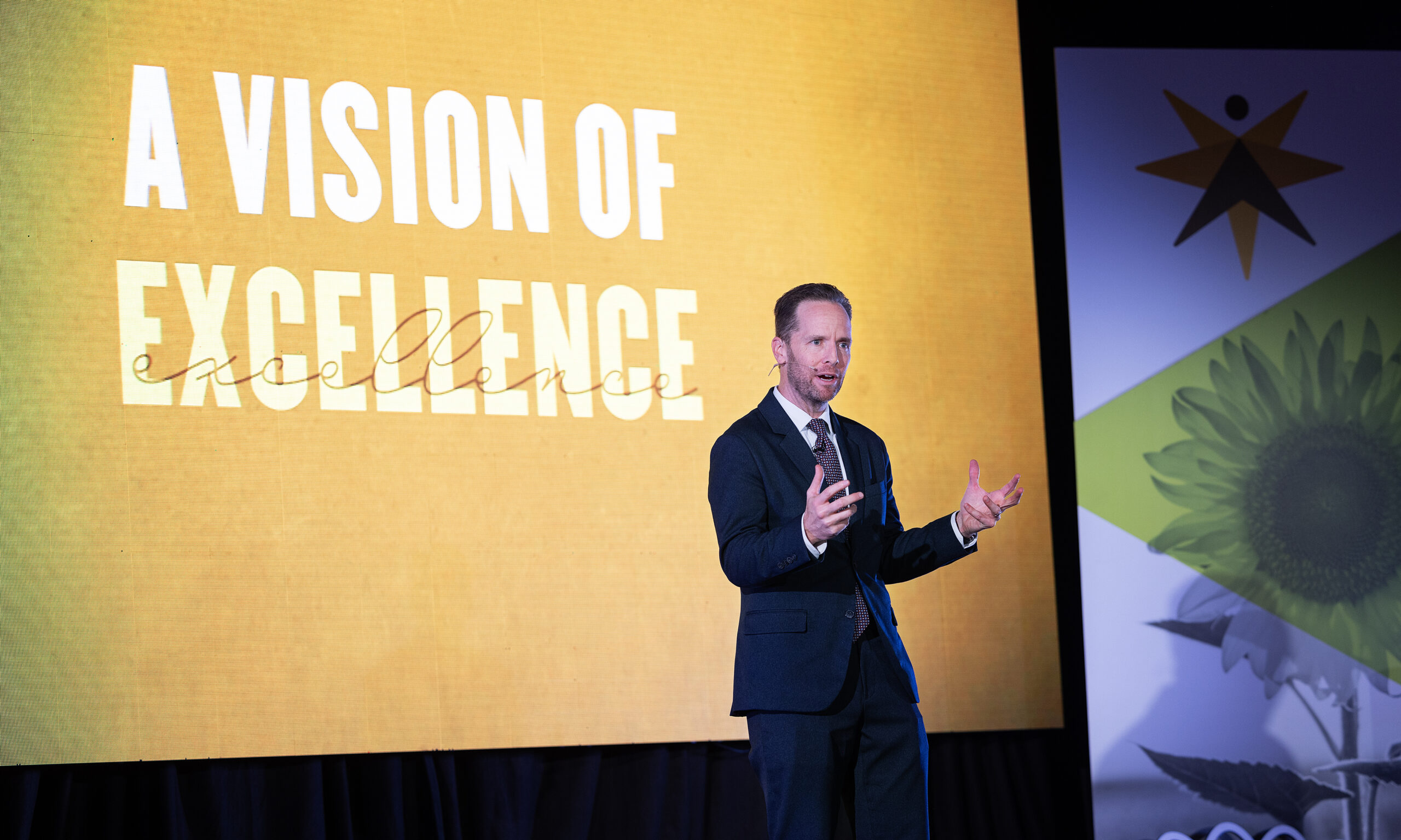
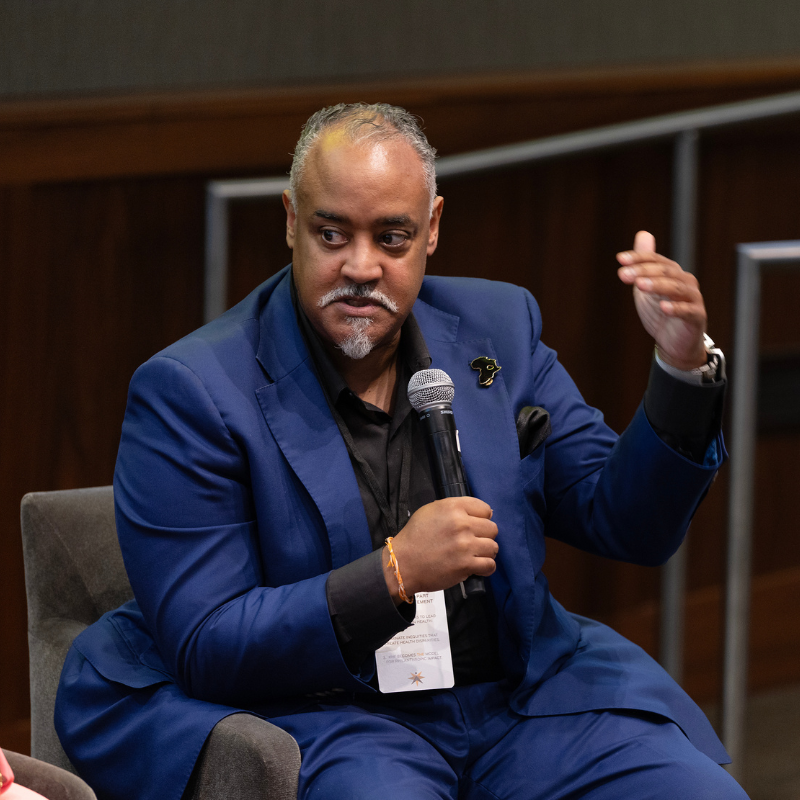
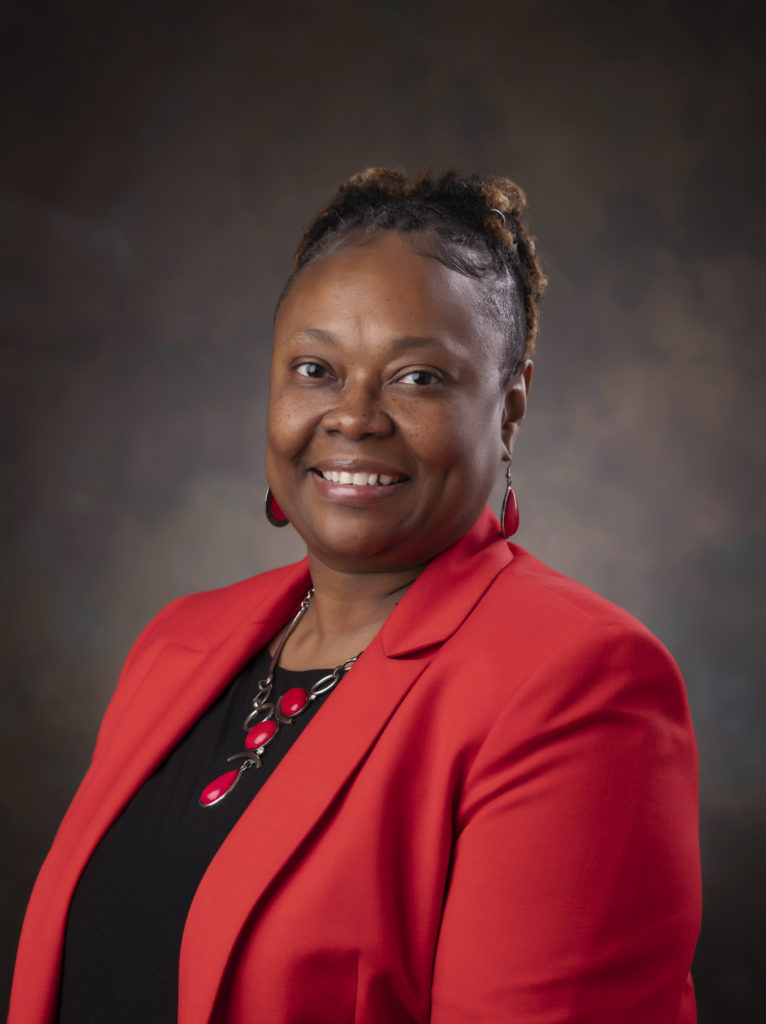
At the 2026 Partner Summit, we went deep into the topic. A panel of civic, community and professional leaders, facilitated by Sharla Smith, Ph.D., MPH, Principal Investigator & Director at the Kansas Birth Equity Network, discussed how race and racism continue to shape disparities and influence health in Kansas.
Panelists included:
- Sapphire Garcia, Founder & Executive Director at the Kansas Birth Justice Society
- Mark McCormick, Development Director at Miracle of Innocence
- Ed O’Malley, President & CEO at the Kansas Health Foundation
We pulled key insights from the conversation, discussing history, the impact of race and racism on health and the mindset we need to close the Health Gap.
Historic Barriers
The discussion started with history, highlighting how history can be erased or softened.
Dr. Smith: “What responsibilities do leaders have to keep historical truths connected to present-day health outcomes?”
Mark McCormick: “We’re obligated to be truthful about history and not be intimidated into silence.”
McCormick described the softening of history as nostalgia for the past—noting that nostalgia overlooks the more difficult mindsets and moments of our nation’s history and ignores how racism was an organizing principle for our culture and society.
“It determined where you could live, who you could marry (and) what kind of job you could have.”
– Mark McCormick, Miracle of Innocence
Sapphire Garcia: “The Black community was impacted in such pointed ways that we can’t deny the history. We have to look at the truth of the inequities today through the lens of these 400-plus years of history of anti-Blackness. Everything is embedded so deeply in the medical culture, the legal culture, the government.”
Garcia highlighted specific policies that have created disparate outcomes for Black communities.
For example, the Sheppard-Towner Maternity and Infancy Protection Act of 1921 aimed to improve maternal and infant health outcomes. While it led to decreases in maternal and infant mortality and increases in pediatric care, it also contributed to the decline in midwifery across the country, especially affecting Black communities where midwives performed the majority of care for Black mothers.
Garcia also highlighted the Flexner Report, which evaluated the country’s medical schools. It recommended that Black physicians be trained in hygiene, not medicine, and ultimately led to the closure of five of the seven Black medical colleges. Estimates suggest that between 30,000-40,000 Black doctors would have been educated if the Flexner Report had not targeted their funding and structure.
Sapphire Garcia: “The health inequities that you see today are not a byproduct. It was intentionally set up this way to disadvantage communities of color, to pull funding, to make sure that opportunities would not be available.”
Mark McCormick: “There’s been talk in recent years about reparations, and I don’t know if you can have that discussion without knowing that it wasn’t necessarily slavery that people are asking for reparations for. It is a continued denial of equal protection under the law.”
Dr. Smith: “Historical context is not a closed chapter. It is a living force that continues to shape today’s disparities and inequities. And when that history is erased or softened, our shared responsibility to keep it connected to the present day becomes even stronger.”
Hear about Kansas research in this episode of the Leading Health podcast

Health Inequity
From history to the present day, the conversation turned to the impacts of racism on health. Dr. Smith introduced the theory of weathering—a term coined in 1992 by Dr. Arline Geronimus, Professor of Health Behavior & Health Equity at the University of Michigan School of Public Health.
Dr. Smith: “Weathering is not simply stress. It is the cumulative biological impact of chronic exposure to racism, discrimination, bias and inequity conditions—what research has increasingly described clinically as ‘the body keeping score.’”
Weathering, she continued, is the reason why improved access, such as through education or income, does not always result in improved outcomes.
Dr. Smith: “Black women who have a higher education, higher income and live in better neighborhoods still have worse health outcomes compared to white women that never finished high school.”
McCormick highlighted Dr. Martin Luther King, Jr., who was 39 when he was assassinated, but had the heart of a 50-year-old man.
Mark McCormick: “I saw a tremendous documentary, and it talked about the idea that when you’re confronted with that kind of racism, your cortisol levels will always be high. … And that tension inside begins to break your body down.”
Garcia introduced epigenetics, “the science of our DNA turning pieces off and on preferentially based on what happens to us, what’s happening with our body (and) what context we find ourselves living in.”
Sapphire Garcia: “ Imagine the impact over generations because epigenetic changes are inherited.”
Racism has also contributed to a deep and earned mistrust of the medical system by the Black community.
McCormick brought up the Tuskegee Syphilis Study conducted by the U.S. Public Health Service from 1932-1972 in Macon County, Alabama. Participants were never told they had syphilis and standard of care treatment was withheld so scientists could observe the progression of the disease.
“ And that keeps people from going and getting the care that they really should be getting.”
– Mark McCormick, Miracle of Innocence
Commitment to the Work
In Leading Health, author Ed O’Malley, President & CEO of the Kansas Health Foundation, writes: “To close the Health Gap, we must elevate the economic opportunity for Black and Brown Kansans. We must eliminate the inequities that create Health disparities. We must ensure the same opportunity for Health exists no matter the race of Kansans.”
Our partners are already doing this work—advocating for communities of color, challenging systems, having these courageous conversations and working to create more equitable outcomes. The following resources are meant to help more communities, individuals and organizations commit to this work.
Resources
- Organizational Reflection Guide: Use this guide to assess whether your organization is continuing the work, strengthening the work or leading with accountability.
- Conversation Starters: Advanced prompts for partners who are continuing the work. Use these to move conversations from awareness toward strategy, protection and shared action.
- Commitment Card and Continuing the Work Infographic
Find resources that explore the impact of race and racism on health
Changing the trajectory of health access, opportunity and outcomes based on race is imperative for Kansas to close the Health Gap, and, as our panelists pointed out, Kansas has often been a leader of civic and social issues.
Mark McCormick: “Kansas is the nation’s social fault line. The Civil War—the fuse for the Civil War—was lit in this state. We were the first state to enter temperance prohibition in terms of civil rights. The first successful student-led sit-in was here in Wichita. … I think we do have in our DNA the ability to lead and the obligation to lead.”
Ed O’Malley: “There’s a history in this state of tremendous exercises of civic leadership on the most important issues. So it’s a part of our history. We can do it again, and again, and again, and again.”
Sapphire Garcia: “Everybody calls Kansas the Free State. That’s our moniker. I want us to stop calling Kansas the Free State and start calling Kansas the Liberation State. That’s what we should actually be aiming for. This is not the 1860s anymore. We need the version of freedom where we are actually liberated.”
“We must lead as a state—not because we can but because we should.”
– Sharla Smith, Ph.D., MPH, Kansas Birth Equity Network