







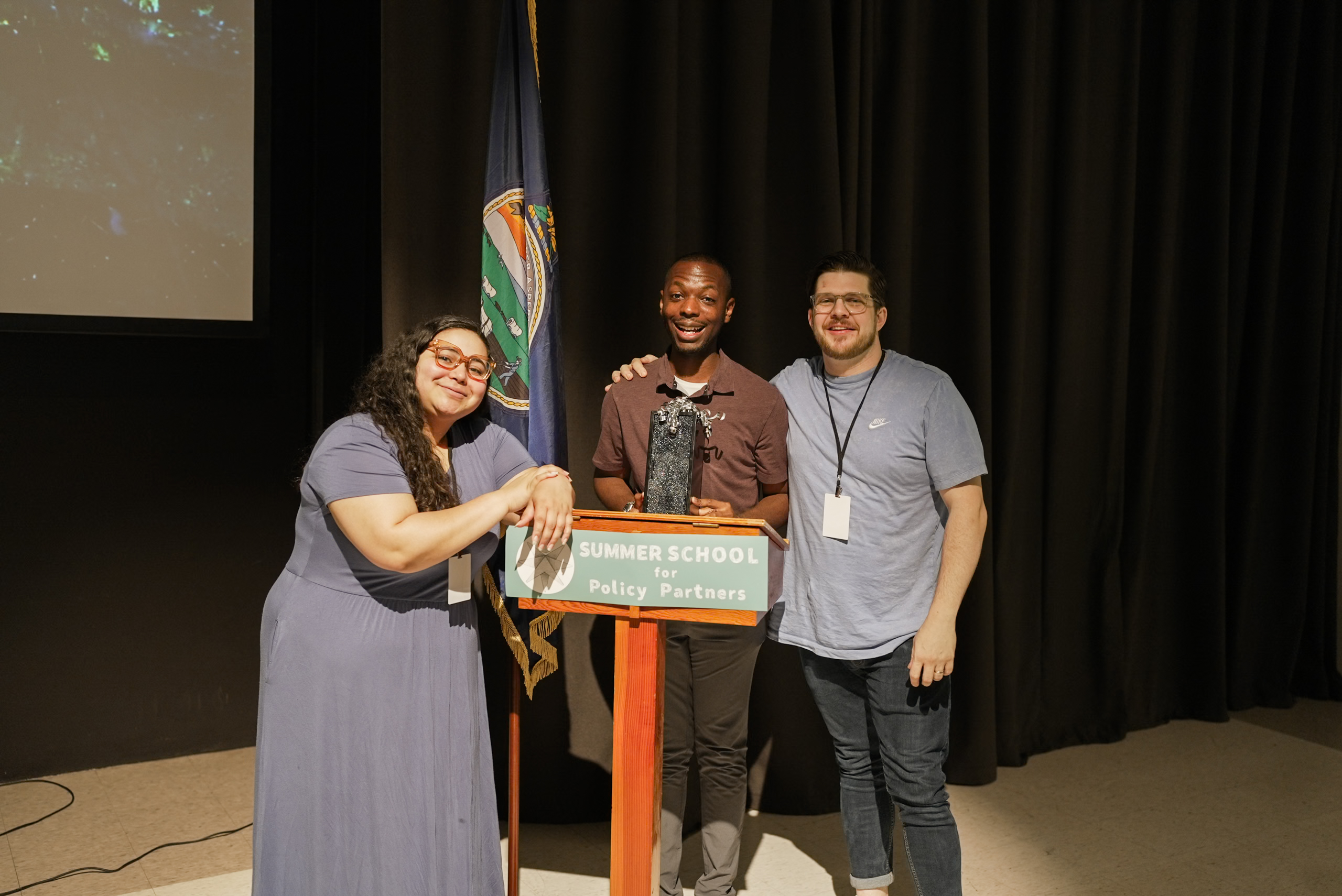


This article is part of the nine mindsets series based on the book Leading Health: How You and 30,000 Kansans Help Communities Thrive. The series was presented at Kansas Health Foundation’s annual Partner Summit in 2026.
In Leading Health, we outline nine mindsets the 30,000 need to adopt to close the Health Gap in Kansas. Mindset #4: Create Collaboration might sound obvious. Across the public, private and nonprofit sectors, people and organizations are collaborating, but can that collaboration be bolder?
Mindset #4 asks us to use our authority and leadership to create the conditions for effective collaboration to exist and succeed.
So how do we do that?
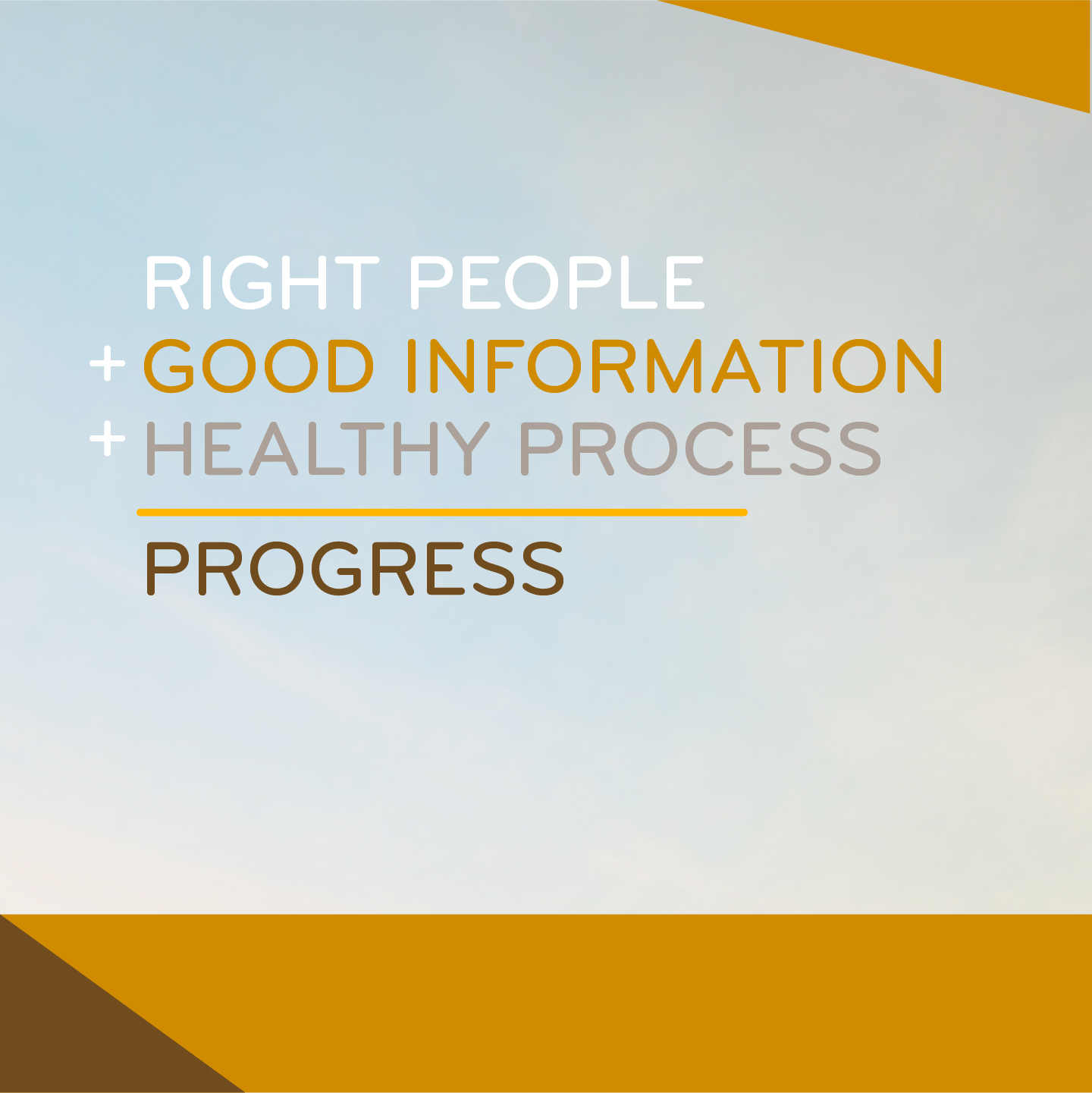
By bringing together the right people with good information and a healthy process.
Get your copy of Leading Health
Consider a statewide economic development organization with a large budget aimed at impacting economic growth. If that statewide organization partnered with community-level grassroots organizations, which typically have much smaller budgets, Kansans might see greater access to and opportunity for Upward Mobility because local voices are now influencing state-level activity.
In another example, if endowed foundations like the Kansas Health Foundation combined resources and efforts with other endowed foundations, they could amplify and expand the work and reach of their grantees through increased funding and technical assistance and shared learning.
We modeled that type of collaboration when we announced a partnership with the Hall Family Foundation and Patterson Family Foundation to turn our $3.1 million of grant funding for the Upward Mobility Transformation Grant Program into $5.3 million. Now, 19 Kansas organizations are launching innovative projects to accelerate the strategies outlined in the Blueprint for Upward Mobility.
Read more about this collaborative effort
Mapping the Network
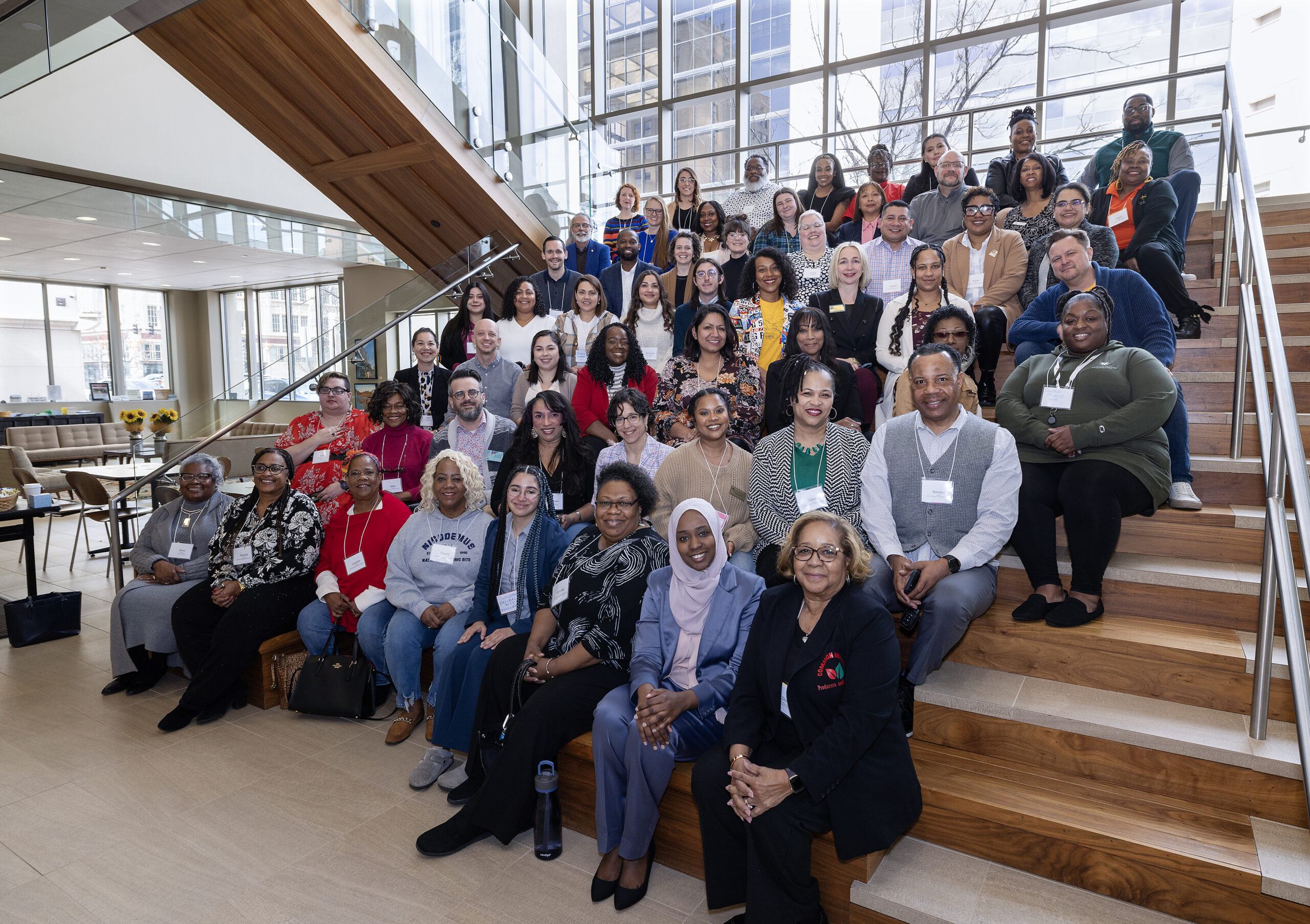
To create the conditions for effective collaboration, we invited our core support partners to map their networks across ecosystems, regions and sectors during an exercise at the 2026 Partner Summit.
The room was full of people and organizations with varied connections, vast areas of expertise and unique spheres of influence. The goal was to get all of that out of individual siloes and into the physical space, making the network more visible and highlighting new and different ways we could all work together.
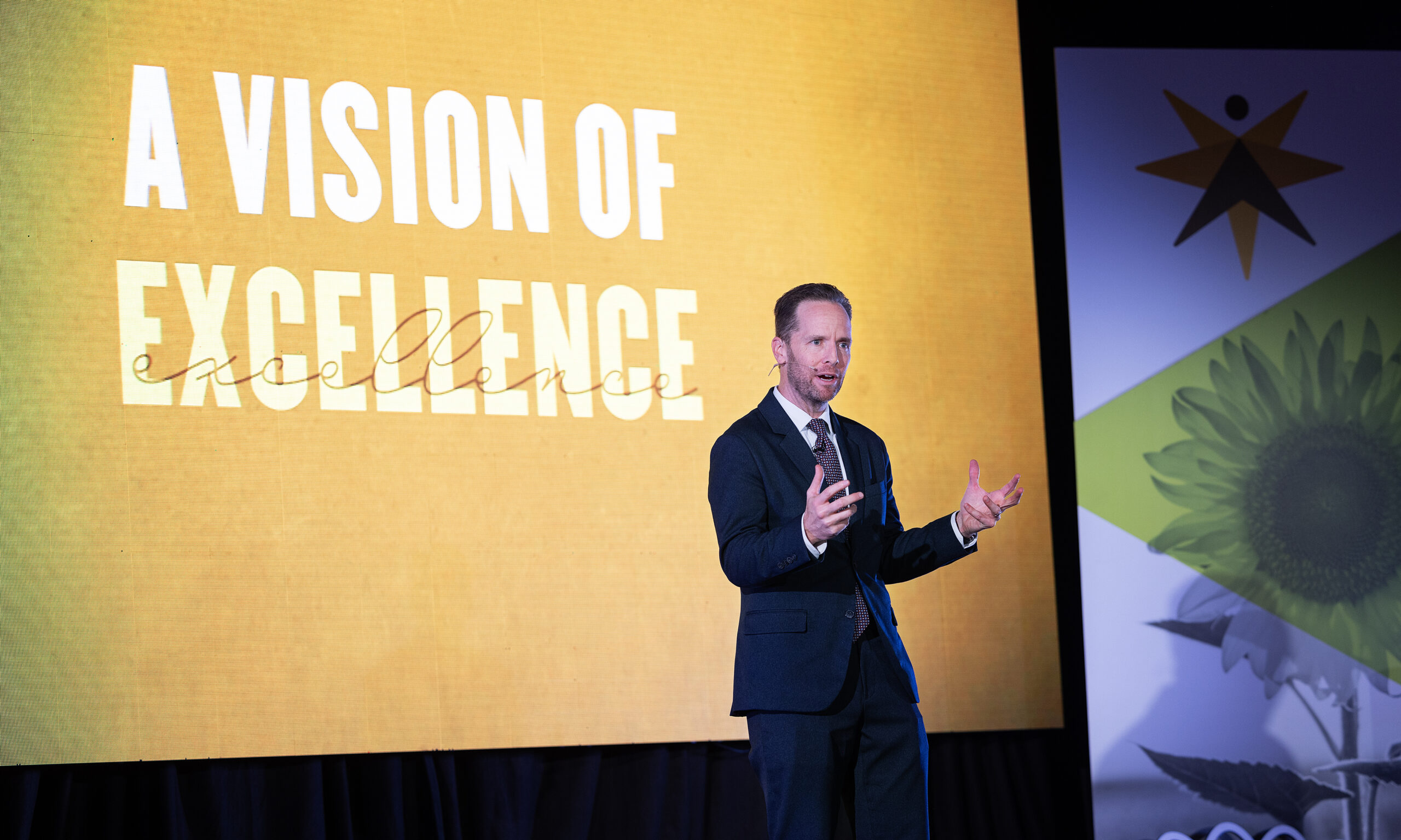
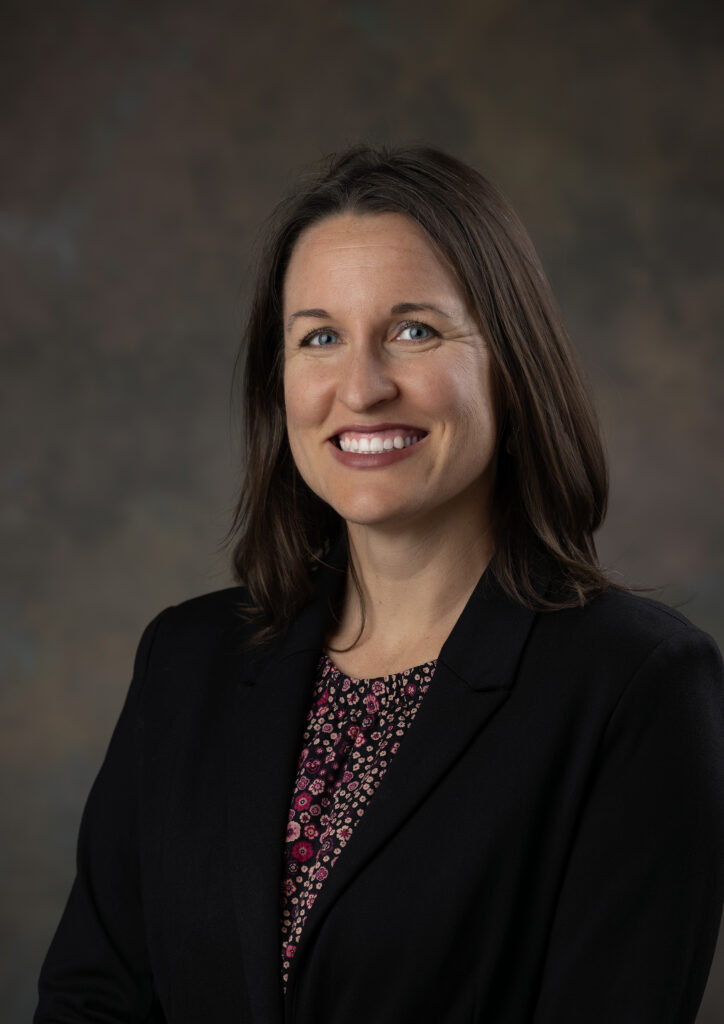
Chris Harris, Heartland Strategies Founder & CEO, helped facilitate this exercise.
Collaboration, at its core, is about layering different perspectives to help us see something in greater detail.
– Chris Harris, Founder & CEO, Heartland Strategies
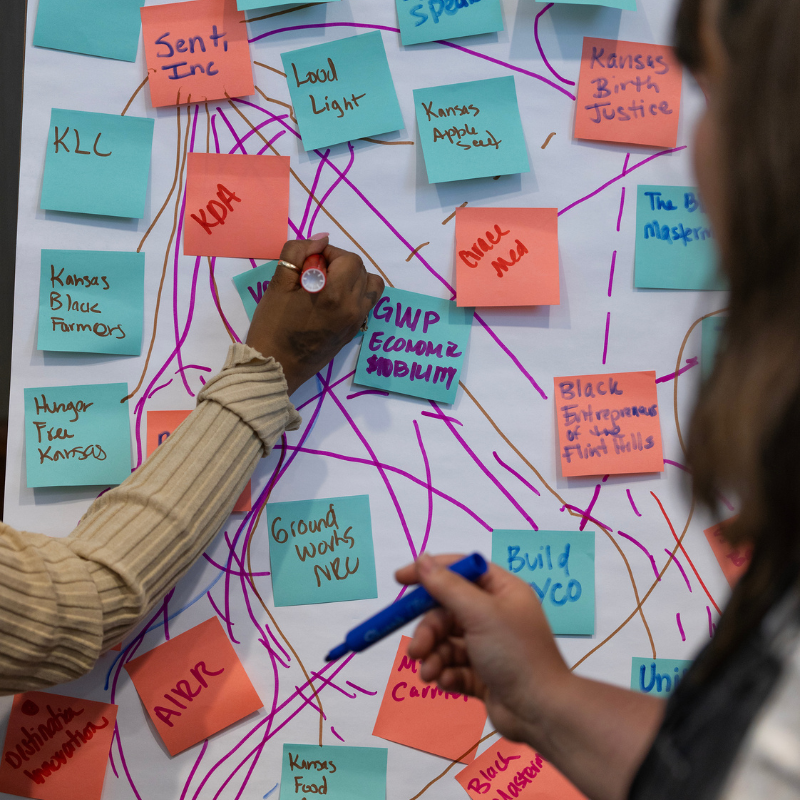
In small groups, we mapped our networks on flipcharts around the room. Each group moved from flipchart to flipchart to layer on their own perspectives. Of course, when several groups of people layer their own networks and perspectives on top of each other—via multiple Post-It Notes, shapes and connecting lines—it starts to get a little messy. Part of the exercise was to embrace the mess and let go of control, which is a barrier to effective collaboration because, in order to collaborate, you share control and power with others.

Creating the Conditions
When we made it back to our original flipcharts, our network maps had been completely reinterpreted. We asked our partners what they saw in those reinterpretations.
Johnathan Sublet of SENT Topeka observed that many of Kansas’s statewide efforts appear to come out of Wichita rather than the state capital in Topeka, highlighting how effective collaboration doesn’t necessarily need to sit in the seat of authority.
Michael Odupitan of Omni Circle Group noticed how much activity was already happening in certain networks and realized his organization didn’t need to be represented in all of the work because others are doing their parts.
We all don’t have to fit every place. You fit into places that actually need you.”
– Michael Odupitan, Founder & CEO, Omni Circle Group
At the end of the exercise, our maps spanned different issues and geographies and represented the capacity, talent and resources that could be offered to every organization in the room. It reminded us that creating collaboration does not always require building something new. Sometimes it starts by seeing the network around us more clearly—who’s connected, whose perspectives are missing and what each of us can offer or ask of others.
Our final ask of our partners during this exercise was to identify one collaboration they could ask for and one they could offer back to the group. How are you going to help create the collaborative conditions that drive progress?
Dive deeper into Mindset #4 in this episode of the Leading Health podcast