



Related content
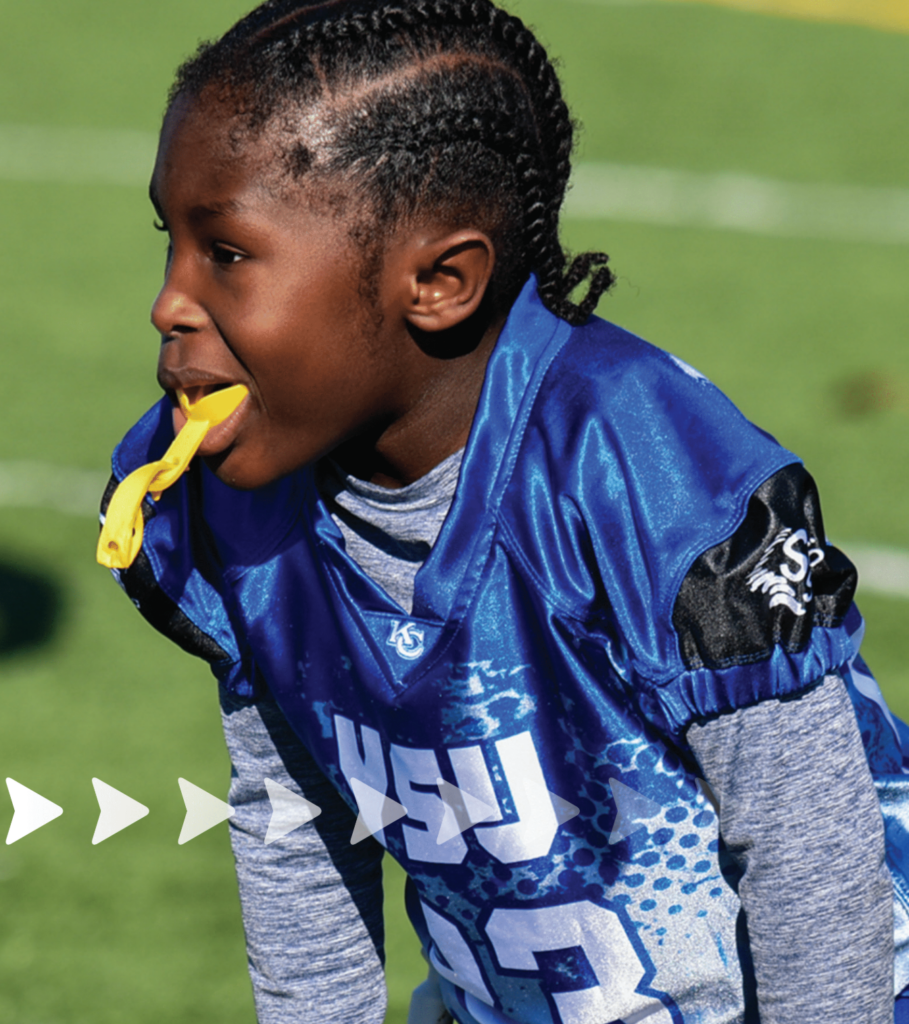
At KC United, football is just part of the game
At KC United, football is just par...
In Kansas City, Kan., one football league puts education and family togetherness above touchdowns.
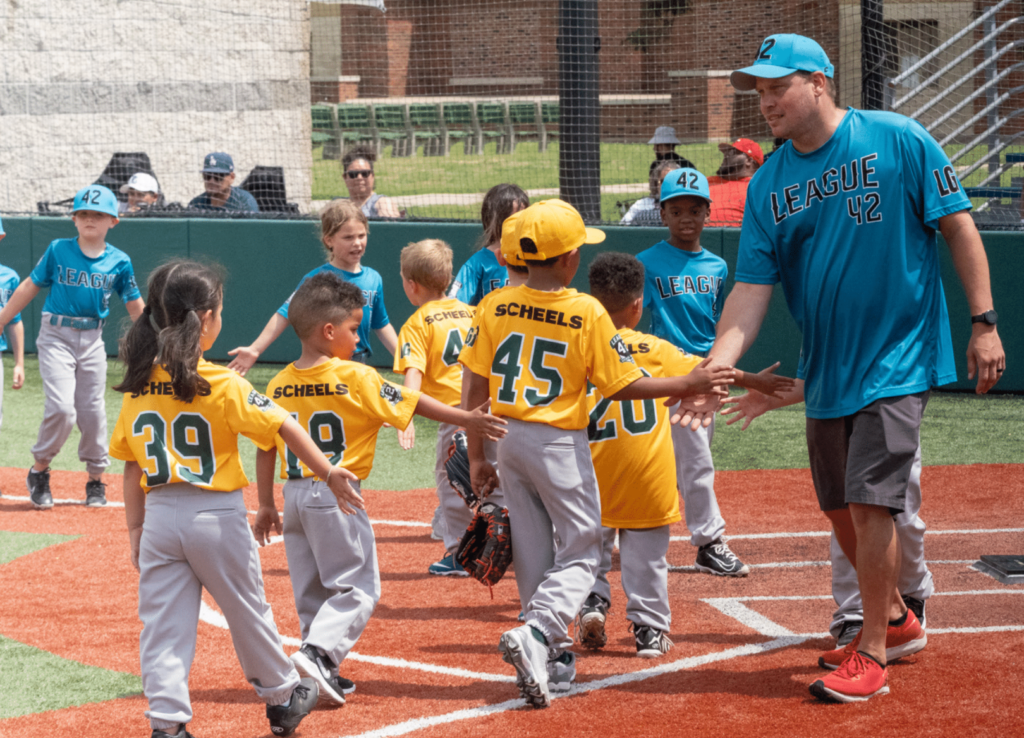
League 42 brings right priorities to baseball and beyond
League 42 brings right priorities ...
In a nod to baseball hero Jackie Robinson, Wichita’s League 42 honors participation and inclusion.
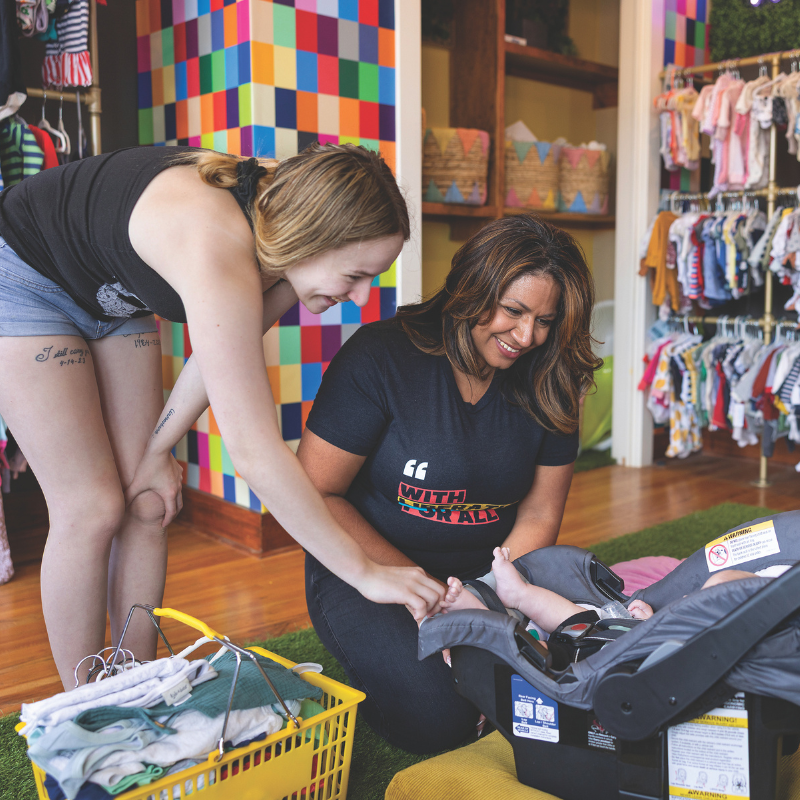
Lived Experience Inspires the Kansas Birth Justice Society
Lived Experience Inspires the Kans...
Between 2016 and 2018, the rate of pre-term births for Black mothers in Kansas was 51 percent higher than among all other women.
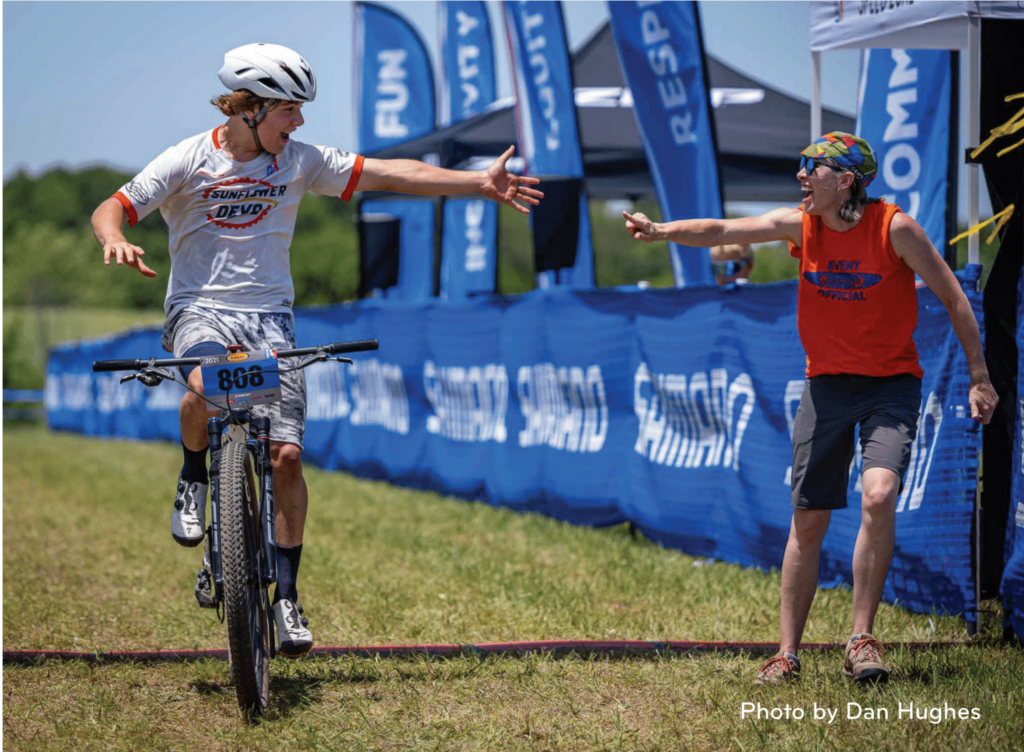
It’s amazing where two wheels can take these kids. As teammates in the Kansas Interscholastic Cycling League, they have no scoreboard, no bench for second-teamers, no try-outs and no defeats. Instead, they’re just a close-knit pack of two-wheeled winners, learning biking, health and life skills along the pathways.
“It’s about learning who you are, not winning or losing,” said Tina Khan about the league she founded five years ago. “The bikes are simply a tool to create belonging and camaraderie, inspire confidence and improve health.”
Children in sixth through 12th grades can join one of 11 teams scattered across the state. Currently nearly 300 bikers participate on regional teams in Hutchinson, Great Bend, Wichita, Lindsborg, Emporia, Manhattan, Tipton, Topeka, Lawrence, Louisburg and Olathe. They practice and learn biking and life skills throughout the January-to-May season, and wrap up in spring with five events the entire league competes in.
All youths are welcome to join, no matter ability or disability, and no one is cut, unlike traditional sports. “This fills a gap need — kids on bikes is a space where every kid belongs. There’s no hierarchy, no kids thinking you’re better than me. Instead, everybody here is cheering for everybody else. It’s euphoric,” said passionate biker Khan, about the league she helped form as an affiliate of NICA (National Interscholastic Cycling Association).
Fourteen-year-old Elizabeth Palen, a cyclist on the North Central Kansas Raptors team in Tipton, agrees that everybody fits in: “It’s different because there is no bench so you don’t have to compete with your friends for a spot. You can just race at your own pace and have fun.”
Participants ride their own bicycles, but if they don’t have one, their local team can help get a bike. The cost to join is about $300 per person.
Each team has a certified coaching staff (at a rate of one coach per six youths). Coaches, who are all volunteers, complete extensive NICA training and certification to become licensed. All coaches attend leaders’ summits and, to qualify for the highest level of coaching, they must reach a required number of coaching hours, attend a simulation training and complete first-aid certification.
Coaches ride at all times with the kids during training and, most important, act as role models and teachers.
“Those who volunteer to be coaches can have all the biking experience in the world, or they might be age 53 and haven’t ridden since they were 10 years old. They cover the entire spectrum, but they all have to have one qualification — to care about kids belonging,” said Khan, a former K-12 teacher who works in the leadership and civic engagement field. A native of Emporia, the biking hub of gravel-grinding, she now resides just down the road in Cottonwood Falls, where she pedals the surrounding Flint Hills and beyond.
For Emporia’s Ryan Balkenhol, also an avid lifelong cyclist (so avid, he has competed in two 350-mile bike races), getting involved was a perfect fit. He founded Emporia’s Coyote Composite squad, with the goal of cycling and mentoring kids hand in hand.
“At the time, Emporia didn’t have any other opportunities for youth development in the cycling world,” Balkenhol recalled about launching the Coyotes five years ago. “I have three boys and I started it with the intention of giving kids like my own an opportunity to do something different that wasn’t a ball-type sport — but instead, a place where they get to perform and be a part of something.”
The Coyotes had nine members the first year and now number 25 student athletes from Emporia and surrounding rural communities. Two of Balkenhol’s sons pedal on the team and the youngest will join in a few years as a sixth-grader.
Ten coaches teach and motivate the howling squad (yes, they do sometimes howl on the trail). “The biggest thing we provide is that we’re not just focused on biking, but we’re mentoring these kids, building their skills, minds and bodies, and making them stronger in all aspects,” Balkenhol said. “Helping them grow up to be better adults and leaders really inspires me to do the most I can for our team.”
Coaches and their teams meet and practice weekly throughout the season. In winter, when it’s too cold to pedal, they often gather in a bike shop or other indoor venues to discuss bike maintenance and skills and play team-building games. In nicer weather, they’re riding routes with their coaches, preparing for the springtime events.
Each team practice has three parts: skill development, such as braking, speed or starting-line tips; character development; and finally, social and team building. “The time spent with the team and coaches at weekly practices gives kids the ability to work through life skills, while having fun on a bike,” Khan said.
For Balkenhol, keeping it fun is key. “I like to think back to when I was their age and what was fun about riding a bike. We keep it fun and light and try to be creative in how we plan our practices and lessons so it’s not just becoming a drill,” he explained. “We want them eager to come back!”
And, also, eager to spread the word about the joy of joining a team. “In a state that’s not a year-round cycling destination, it’s tough to get kids’ attention when they have basketball, baseball and other traditional sports. Word of mouth is our best advertisement,” Balkenhol said.
Elizabeth Palen, an eighth-grader, and her family do their part spreading the word in north-central Kansas about the NCK Raptors. “I like being a part of the team because I make lots of new friends and I get to participate in fun race weekends,” Elizabeth explained about her message.
Her brother and teammate Isaac, an 11th-grader, agrees: “It’s fun to meet other mountain bikers from all over Kansas,” he said. “I’ve also learned there are a lot more places to ride in flat-land Kansas than I ever imagined.”
Their dad, Doug Palen, started the Raptors and his youngest son will join the team next year.
When the league started up, Doug, a mountain-bike enthusiast who farms near Tipton, got busy forming a regional team. “I was certainly all excited about supporting it. I became team director, found a head coach and started telling the team story to small communities in the area,” Doug recalled. “That first year we had 12 athletes and we have 24 today from all across north-central Kansas — from Osborne to Concordia to Lincoln.”
Just like his daughter, Doug’s favorite rallying point is “in this sport, there is no bench!” “Oftentimes students aren’t the star athlete in traditional ball and stick sports, but here they find a place to participate the same as all the other students. Everyone practices like everyone else,” Doug said.
And, rather than focusing on competition, it’s more about family and community. “People might think it’s a competitive bike racing league,” Balkenhol added, “but that’s not the main focus. It’s more about growing a community and getting families involved.”
Often the entire family joins in as volunteers and coaches. “It’s something you can do with your kids. That’s a bigger win than if it’s just an athletic team to join,” Doug said.
Once families experience their child’s biking passion, the whole clan often purchases bikes and goes biking together on community trails or takes their bicycles on vacations.
Spring brings more serious team workouts when state parks and private farms host the league’s five competitive events. The 2025 season’s cleverly named five include: “Get Wicked at Wilson” at Wilson State Park, Sylvan Grove; “Crankin’ the Creek” at Fancy Creek State Park, Randolph; “Trailcat Growler” at Lewis-Young Park, Louisburg; “Snake Farm Showdown” at Snake Farm Ranch, Lawrence; and “Top City Climbin’” at Saw River State Park, Topeka. Terrain ranges from rocky, narrow climbs and descents at Snake Farm Ranch and Wilson State Park to ravines and creek beds at Fancy Creek State Park.
If it rains out one of the five weekends, there’s a final option, “Fat Tires on the Farm,” scheduled as a rain make-up event at the end of the season. Doug Palen hosts the race at his Tipton farm. “I just enjoy sharing our farm and giving people an opportunity to experience it on a bicycle,” Doug said.
The “unique experience,” as Doug calls it, takes riders through a hay barn tunnel, outdoors alongside huge combines and grazing livestock, and on a course through a crop field and across a creek. It’s Tina Khan’s favorite event!
For the 70 local volunteers that help set up and run each weekend race, it’s a three-day affair, spent assisting with parking, check-in, timing and serving as course marshals and course setters. Their work starts on Fridays with set-up, and teams and coaches arrive Saturday. After a coach’s meeting, all coaches must ride the course as a group to give feedback about any safety concerns or issues to the organizers.
Saturday afternoon, coaches and their teams ride the course to familiarize themselves for Sunday’s race. Saturday night is party time, with food trucks, music, flag football and other freewheeling fun.
Each team has its own colorful pit zone, a lively gathering place with tents where the bikers overnight, sponsorship banners and pop-up tents for concessions and race information. “Oh, it’s a party,” laughed Khan.
Races run in waves on Sunday, by grade levels. Distances range from one lap of 2.5 miles for the youngest to four laps for the oldest. The speediest finishers in each grade are recognized with awards at the podium ceremony. In addition, teams hand out their own honors, such as “best cheerleader, most improved, and coolest high five,” said Khan, guaranteeing there are lots of winners.
It’s a win-win for entire families. “The cool thing is it’s equally all parents that get involved — single parents, married and both mom and dad — it’s all hands on deck,” Khan concludes. “They cheer on every kid, not just their own, and lift each other up. The saying ‘it takes a village’ — I’ve never seen it at work anywhere like it is in cycling.”
###